10 Best RCM Practices for Credentialing & Privileging

In modern healthcare, credentialing and privileges in medical staff administration are no longer just regulatory checkboxes; they are strategic components of operational success. From ensuring patient safety to improving your bottom line, these processes are deeply intertwined with revenue cycle performance.
Delayed credentialing, missing documentation, and privileging errors can cost medical practices and hospitals significant revenue while increasing compliance risks. That’s why healthcare leaders must understand how to align these administrative functions with smart revenue cycle management (RCM) strategies.
1. Why Credentialing Impacts Revenue More Than You Think
Credentialing is not just a formality, it's the first gatekeeper to your organization’s cash flow. Providers who aren’t fully credentialed with insurers can’t legally submit claims, meaning every day they work without active credentials results in lost revenue. Delays in credentialing often lead to unpaid services, billing backlogs, and denials that negatively impact short-term revenue, increase days in accounts receivable (A/R), reduce clean claim rates, and raise the risk of audits. To avoid these issues, it’s essential to automate the provider credentialing process using reliable tools and begin at least 90 days before the provider’s start date. This includes verifying licenses, checking malpractice history, and completing payer-specific requirements early to prevent last-minute delays that freeze billing operations.
2. Privileging Ensures Accurate Billing and Patient Safety
While credentialing confirms qualifications, privilege defines what specific services a provider is allowed to perform. Billing for procedures outside of those privileges can result in compliance violations or rejected claims. That's why strong medical billing compliance depends on keeping privileged records updated and in sync with billing systems. Hospitals and practices should regularly review and adjust privileges as providers gain new skills or certifications to ensure accurate medical coding and safer care delivery.
3. Credentialing Alone Isn’t Enough — Enrollment Matters Too
Even after credentialing is complete, providers can’t submit claims until they’re enrolled with insurance payers. That’s where payer enrollment services come into play. Many organizations mistakenly assume credentialing and enrollment are the same thing, but enrollment is a separate, essential step that puts providers into payer networks. Starting this process alongside credentialing helps reduce delays and ensures providers are ready to bill from day one.
4. Using Technology to Speed Up the Process
Manually managing credentialing with spreadsheets or paper forms is time-consuming and error-prone. Today’s practices benefit greatly from healthcare credentialing software that automates tasks like license verification, expiration alerts, and document tracking. These tools help you avoid missed deadlines and reduce credentialing turnaround times so that providers can onboard and bill sooner. They also bring much-needed transparency to the entire credentialing workflow.
5. Clean Credentialing and Clean Claims
Incomplete or incorrect credentialing is one of the top reasons for claim denials. Something as small as a wrong NPI number or outdated license can stop reimbursement in its tracks. By aligning your credentialing and billing teams early on and verifying all provider information through audits, you reduce denials and speed up payments. A clean provider credentialing process leads to a cleaner revenue cycle and fewer headaches for everyone involved.
6. Delegated Credentialing Can Fast-Track Payer Approval
For larger organizations, delegated credentialing offers a huge advantage. With payer permission, you can manage credentialing internally and get faster enrollment approvals. This directly supports revenue cycle optimization by cutting down on payer delays and getting providers to work and bill more quickly. If your practice or facility handles high-volume onboarding, it’s worth exploring delegation agreements with major insurers.
7. Privileging Gaps Lead to Risk and Revenue Loss
If a provider performs a service they aren’t privileged for, and it gets billed, that can trigger audits and repayment demands from payers. Keeping privileged records aligned with each provider’s scope of practice is critical to staying compliant. You also protect your revenue stream by ensuring that only properly authorized services are being billed, keeping you in line with medical billing compliance rules and avoiding potential penalties.
8. Coordination Is Key to Avoid Revenue Disruption
Credentialing, privileging, and billing are often siloed across departments, and poor communication leads to mistakes, delays, or missed updates. For smooth operations, it’s essential to bridge these gaps with shared tools, alerts, and regular meetings. A well-coordinated team supports stronger revenue cycle optimization by reducing duplication, improving timelines, and making sure everyone stays on the same page from onboarding to billing.
9. Credentialing Delays Impact Productivity and Access
Every day a provider isn’t credentialed is a missed opportunity for care delivery and revenue generation. This is especially costly in specialties where provider availability is already tight. Practices that streamline their processes or invest in outsourced RCM solutions can onboard providers faster and ensure they’re billing as soon as possible. This not only protects income but also improves access to care for patients waiting to be seen.
10. Outsourcing Takes the Pressure Off Your Team
Managing credentialing, enrollment, and billing internally can quickly overwhelm your admin staff, especially when juggling multiple providers and payers. That’s why many practices choose to partner with companies offering payer enrollment services and full revenue cycle support. Outsourcing brings in expertise, reduces errors, and frees up your team to focus on patient care while ensuring your revenue keeps moving without delays.
Regulatory Bodies That Influence Credentialing and Billing
Compliance isn't optional in healthcare. Key regulatory bodies and frameworks that govern credentialing and billing include:
- Centers for Medicare and Medicaid Services (CMS) – for Medicare enrollment and billing rules.
- The Joint Commission (TJC) – for hospital privileging and re-credentialing standards.
- National Committee for Quality Assurance (NCQA) – credentialing guidelines for managed care organizations.
- State Medical Boards – for licensure verification and disciplinary checks.
Stay updated with each entity’s evolving standards to avoid non-compliance penalties and payment delays.
Real-World Credentialing Mistakes That Hurt RCM
- Submitting incomplete credentialing applications
- Letting re-credentialing deadlines lapse
- Billing before payer enrollment is complete
- Failing to notify payers of provider location changes
- Using outdated licensure or malpractice insurance info
These mistakes are preventable with a strong workflow, software integration, and experienced credentialing staff or outsourcing partner.
Final Thoughts: Credentialing and Privileging Are RCM Power Tools
When done right, credentialing and privileging in medical staff administration don’t just check compliance boxes; they ensure your providers are active, billable, and audit-ready from day one.
Aligning these processes with your revenue cycle strategy allows for:
- Faster payer reimbursement
- Fewer claim denials
- Higher patient access
- Lower compliance risk
- Better financial forecasting
The bottom line: RCM doesn’t start at claim submission; it starts the moment you credential a provider.
Ready to Streamline Credentialing and Boost Revenue?
At Atlantis RCM, we help healthcare practices remove friction from credentialing, privileging, and payer enrollment. Our end-to-end RCM services ensure you meet payer requirements, stay compliant, and get paid faster.
Our Services


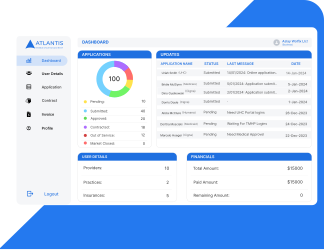
Real-Time Client Report Portal
Access real-time insights into your billing performance with our secure Client Report Portal.Track claims, payments, denials, and KPIs anytime—transparency at your fingertips.
Contact Us