Assignment of Benefits: The Form That Can Change Your Entire Billing Process

A patient signs one form.
It looks like routine paperwork but what happens if that form is incomplete, unclear, or missing?
Your claim could face delays. Payments may take longer. Your billing team may have more work to do. And your practice could end up spending valuable time chasing money that should have moved directly from the insurer to the provider.
That is where Assignment of Benefits comes in, but what exactly does it authorize?
And why should healthcare providers pay attention to it?
Let’s break it down.
What Is Assignment of Benefits in Medical Billing?
Assignment of Benefits (AOB) is an agreement that allows a healthcare provider to receive insurance payments directly from the patient’s insurer.
In simple terms, the patient authorizes the provider to receive the applicable insurance payment for the healthcare services provided.
Instead of the insurer paying the patient first and leaving the practice to collect the amount afterward, the payment can be directed to the provider.
This can make the billing process more straightforward for both the practice and the patient.
But AOB is more than just another registration form.
It connects patient authorization, claim submission, insurance processing, and provider payment into one payment pathway.
And when that pathway is handled correctly, it can help reduce unnecessary administrative friction.
Why Should Providers Care About AOB?
Think about what happens after a patient receives care.
The practice needs to document the service, prepare the claim, submit it to the insurer, monitor its progress, and make sure the resulting payment reaches the right party.
A missing or poorly completed AOB can create complications along that journey.
For providers, the goal is simple:
Get the claim processed correctly. Get the payment to the right place. Keep the revenue cycle moving.
That is why understanding AOB should be part of every practice's medical billing process.
It can also reduce the pressure placed on patients to handle the full insurance payment process themselves.
How Does the Assignment of Benefits Process Work?
The AOB process may look simple from the outside, but several steps need to connect properly.
Step 1: The Patient Gives Authorization
The process generally begins during registration or check-in.
The patient completes the required intake documentation, including the AOB authorization when applicable.
By signing the agreement, the patient gives the provider permission to receive the applicable insurance payment directly.
This is the first important checkpoint.
If the authorization is incomplete, unclear, or improperly documented, problems can appear later when the claim is processed.
Step 2: The Provider Submits the Claim
After the patient receives care, the practice or its billing partner prepares and submits the insurance claim.
Because the AOB authorization is already on file, the claim can direct payment to the healthcare provider rather than the patient.
This is where accurate documentation and efficient insurance claim processing become critical.
Step 3: The Insurer Reviews the Claim
The insurance company then reviews the submitted claim against the patient's coverage.
If the claim meets the applicable requirements, the insurer processes the payment to the provider.
This direct payment is one of the central purposes of AOB. It can reduce the need for providers to rely on patients to receive and forward insurance payments.
Step 4: The Patient Receives an EOB
The process does not necessarily end when the provider receives payment.
The patient can still receive an Explanation of Benefits (EOB) showing what the insurer covered, what was paid, and what amount may remain the patient's responsibility.
That responsibility can include deductibles, copayments, or non-covered services.
So, AOB does not mean the patient has no financial responsibility.
It simply helps establish who receives the insurance payment.
What Should a Valid AOB Include?
Here is where practices need to be careful.
An AOB should clearly capture the information necessary to establish the patient's authorization and the scope of that assignment.
Key elements can include:
Patient information
Insurance details
Provider authorization
Scope of the assignment
Patient acknowledgment of responsibility
Signature and date
Relevant HIPAA disclosure
These details help create a clearer authorization record.
A small documentation gap can become a much bigger operational issue later. That is why AOB should not be treated as paperwork that simply needs a signature.
It should be treated as part of the overall healthcare revenue cycle management process.
What Happens When AOB Is Not Handled Properly?
This is where practices can start feeling the impact.
An incomplete or unclear assignment can contribute to payment delays, disputes, or claim-related complications.
And once a payment is delayed, the problem rarely stays isolated.
Your billing team may need to investigate the account.Staff may need to contact the insurer.The patient may receive additional billing communication.
Your accounts receivable can remain open longer.Suddenly, one overlooked administrative step is creating work across the revenue cycle.
That is why many practices incorporate AOB into their standard billing workflows.
How Can AOB Improve the Revenue Cycle?
When handled correctly, an Assignment of Benefits can support a smoother payment journey.
For providers, direct insurance payments can help reduce the time and effort involved in collecting insurance-related amounts from patients.It can also help lower administrative pressure on billing teams.
That matters because every unnecessary delay in the payment cycle can affect accounts receivable and overall cash flow.The goal is not simply to receive a payment.
It is to create a billing workflow where the right information reaches the right party at the right stage.
That is where efficient medical billing services can make a difference.
What Are the Benefits for Healthcare Providers?
For a healthcare practice, one of the biggest advantages of AOB is a more streamlined payment process.
Instead of relying on patients to receive insurance funds and then coordinate payment with the practice, the insurer can direct the applicable payment to the provider.
This can support:
Faster payment collection
Fewer patient payment complications
Lower administrative workload
Better control over accounts receivable
A more organized billing workflow
The source also highlights that AOB can support lower A/R days and higher collection rates by making the payment process more direct.
But the benefit goes beyond the billing department.
When payment processes are clearer, staff can spend less time dealing with avoidable payment questions and more time supporting practice operations.
What Does AOB Mean for Patients?
AOB can also simplify the financial side of healthcare for patients.
Instead of having to manage the insurance payment and then make sure the provider receives the appropriate amount, the insurance payment can go directly to the practice.
Patients can still receive an Explanation of Benefits showing what the insurer covered and what they may owe.
This creates greater clarity around the patient's financial responsibility. According to the source, AOB can also reduce upfront financial pressure and simplify billing-related administration for patients.
That makes AOB relevant not only to medical billing companies but also to the overall patient experience.
What Are the Most Common AOB Problems?
AOB itself may be straightforward.
The problem is usually what happens when the process around it is inconsistent. A practice may have an authorization form, but is it complete?
Is the patient information accurate?
Is the insurance information current?
Is the scope of the assignment clear?
Is the signature properly documented?
These details matter.
A missing or unclear element can create confusion later in the claim and payment process.
And once confusion enters the billing workflow, staff may need to spend additional time correcting it. That is why practices should view AOB as a process rather than simply a document.
AOB Is One Piece of a Much Bigger Billing Picture
It is easy to look at Assignment of Benefits as an isolated administrative requirement.
But it is actually connected to several stages of the revenue cycle.
Patient registration.
Insurance information.
Claim preparation.
Claim submission.
Insurance review.
Payment posting.
Patient responsibility.
Each stage affects what happens next.
If one part of the process is weak, the impact can move through the rest of the cycle.
This is why practices need more than individual billing tasks.
When Should Practices Consider Professional Billing Support?
Managing billing internally can become increasingly difficult as patient volume grows.
More patients mean more insurance information, more claims mean more follow-up.
More payment activity means more opportunities for errors, delays, and administrative bottlenecks.
Professional medical billing services can help practices organize these workflows while allowing internal teams to focus on patient care and practice operations.
The right billing partner can support areas such as:
Claim preparation and submission
Insurance follow-up
Payment posting
A/R monitoring
Denial identification
Billing workflow management
The goal should not be to add another layer of complexity.
It should be to make the existing revenue cycle more organized and easier to manage.
Why AOB Should Not Be an Afterthought
A patient's signature may take only a moment but the payment journey that follows can affect the practice for weeks.
That is why AOB deserves attention during patient registration and throughout the billing workflow.
A clear authorization can help establish where insurance payments should go. Accurate information can help prevent avoidable confusion, consistent billing processes can help keep claims and payments moving.
In other words:
The smallest billing details can sometimes have the biggest operational consequences.
The Bottom Line
Assignment of Benefits may look like a simple form, but it can influence how smoothly money moves through your practice.
When authorization, claims, insurance processing, and payment workflows work together, providers can reduce unnecessary friction and create a more organized billing operation.
At Atlantis RCM, we help healthcare providers take a closer look at the processes behind their revenue cycle so billing does not become the reason payments slow down.
Your claims should move forward not get stuck in the details.
Ready to strengthen your billing workflow?
Schedule Your Free Billing Audit with Atlantis RCM.
Frequently Asked Questions
What is Assignment of Benefits in medical billing?
Assignment of Benefits is an authorization that allows a healthcare provider to receive applicable insurance payments directly from the patient's insurer.
When does a patient usually sign an AOB?
The AOB is generally completed during patient registration, check-in, or the intake process before or around the time healthcare services are provided.
Does AOB eliminate the patient's financial responsibility?
No. Patients may still be responsible for deductibles, copayments, or services that are not covered by their insurance.
What is the difference between AOB and EOB?
AOB authorizes the provider to receive insurance payment directly. An EOB explains how the insurer processed the claim, including payments and potential patient responsibility.
Why is AOB important for practice?
It can simplify insurance payment collection, reduce unnecessary patient payment handling, and support a more efficient revenue cycle.
Our Services


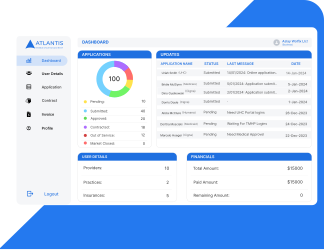
Real-Time Client Report Portal
Access real-time insights into your billing performance with our secure Client Report Portal.Track claims, payments, denials, and KPIs anytime—transparency at your fingertips.
Contact Us