EOB Reconciliation: Why It Matters for US Healthcare Practices

Getting paid does not always mean getting paid correctly.
One missed adjustment, incorrect payment, or unresolved balance can quietly cut into your practice's revenue.
In the healthcare revenue cycle, even small payment gaps can quietly turn into bigger financial problems.
So, how do you know your EOB matches what your practice actually received?
EOB Reconciliation: The Step Between Getting Paid and Knowing You Got Paid
A payment may arrive, but does your practice know exactly why that payment was made, what was adjusted, and what remains unpaid?
That is where EOB reconciliation becomes critical.
Every Explanation of Benefits contains details that connect an insurance claim to its financial outcome. When those details are not carefully reviewed and matched with payments, small discrepancies can quietly become larger revenue problems.
For busy healthcare practices, accurate reconciliation is not simply an administrative task. It helps create a clearer financial picture, identify outstanding balances, and prevent money from slipping through the cracks.
What Is EOB Reconciliation?
Explanation of benefits reconciliation is the process of comparing an insurer's Explanation of Benefits with the corresponding claim, payment, adjustments, and patient responsibility.
The goal is simple: make sure the financial information recorded in the practice's system matches what the payer actually processed.
An EOB typically shows whether a claim was paid, denied, adjusted, or assigned to patient responsibility. It may also provide information about allowed amounts, contractual adjustments, deductibles, copayments, and coinsurance.
When these details are properly reviewed, billing teams can determine whether the account has been posted correctly.
Without this step, a payment can be entered into the system while an adjustment or remaining balance is overlooked.
Why Does EOB Reconciliation Matter?
Healthcare payments rarely follow a simple path.
A single claim can involve an insurance payment, contractual adjustment, patient responsibility, denial, or secondary payer. If the information is not matched accurately, the practice may have an incorrect account balance without realizing it.
Effective EOB reconciliation helps answer important questions:
Was the correct payment posted?
Were insurance adjustments recorded accurately?
Is there still money outstanding?
Was the claim partially paid or denied?
Does the patient owe a balance?
Does the account require further action?
These checks provide a stronger foundation for accurate financial reporting and cleaner account management.
What Happens During the Reconciliation Process?
A structured EOB review usually begins by matching the payer's information with the patient's account and submitted claim.
The billing team then compares the billed amount, allowed amount, payment received, contractual adjustment, and remaining balance.
If the figures match, the account can be updated accordingly.
If something does not match, the discrepancy needs to be investigated before the account is considered complete.
For example, an EOB may indicate that an insurer paid less than expected because a service was denied or adjusted. Simply posting the received amount without investigating the difference could leave an incorrect balance or missed follow-up opportunity.
This is why accurate EOB processing is closely connected to effective payment posting.
Common Problems EOB Reconciliation Can Identify
Even when a practice receives regular insurance payments, discrepancies can occur.
Common issues include incorrect payment amounts, missing adjustments, duplicate postings, unresolved denials, incorrect patient balances, and claims that require additional follow-up.
A consistent reconciliation process can bring these issues to attention earlier.
It also gives billing teams better visibility into where claims are getting stuck and which accounts require action.
For practices managing large claim volumes, that visibility can make a significant difference.
EOB Reconciliation and Cash Flow
Accurate financial records are essential for maintaining predictable cash flow.
When payments are posted incorrectly or outstanding balances are overlooked, the practice may not have a reliable understanding of its actual financial position.
EOB reconciliation helps connect the payer's final claim decision with the practice's accounting records. This creates a more accurate picture of collected revenue and unresolved accounts.
For a small medical practice, this can be particularly important because even a relatively small number of unresolved or incorrectly posted claims can affect monthly collections.
The process also supports broader revenue cycle management efforts by giving billing teams clearer information for follow-up, denial handling, and account resolution.
Where Practices Often Lose Visibility
The biggest problem is not always a large billing error.
Sometimes it is a collection of small discrepancies that remain unnoticed.
A payment may be posted without the correct adjustment. A denied claim may remain inactive. A patient balance may be inaccurate. Or an underpayment may never receive further attention.
Over time, these gaps can create financial leakage and make it harder for practice owners to understand where revenue is being lost.
That is why reconciliation should be treated as an ongoing control within the billing workflow rather than an occasional administrative review.
How to Reconcile an EOB Step by Step
Once an EOB arrives, the first step is to locate the corresponding patient account and claim. The billing team should confirm that the payer, patient, date of service, and claim information all match.
Next, compare the amount billed with the allowed amount and the payment reported by the insurer. Any contractual adjustment, deductible, copayment, coinsurance, or remaining patient responsibility should also be checked.
The final step is to make sure the practice's records reflect the same outcome shown by the payer.
This structured approach makes medical billing reconciliation easier to manage and gives the billing team a clear path when something does not match.
What Should Be Checked Before Closing an Account?
An account should not be considered complete simply because an insurance payment has been received.
Before closing the account, billing staff should verify that the payment was applied to the correct claim and that all adjustments were recorded appropriately.
They should also confirm whether the EOB indicates a remaining balance, denial, secondary insurance responsibility, or another follow-up requirement.
A careful EOB review can prevent accounts from being closed prematurely and reduce the possibility of unresolved balances being overlooked.
Identifying Insurance Underpayments
Not every payment discrepancy is obvious.
An insurer may pay a claim, but the amount received may still be lower than what the practice expected. The difference could result from an adjustment, payer contract, denial, bundling issue, or another processing decision.
This is where reconciliation becomes especially valuable in effective claim management.
By comparing the payer's figures with the original claim and expected payment, billing teams can identify potential underpayments and determine whether further investigation is necessary.
Without this comparison, an underpayment may simply be accepted and recorded as final.
What Happens When the Numbers Do Not Match?
A discrepancy does not automatically mean the payer made an error.
The difference may have a legitimate explanation within the EOB. However, it should still be reviewed before the account is finalized.
The billing team may need to check the claim details, payer policy, coding information, contract terms, or previous claim activity.
If the discrepancy is valid, the account can be updated accordingly.
If it appears incorrect, the claim may require correction, additional documentation, or an appeal.
This makes EOB reconciliation healthcare workflows valuable not only for financial accuracy but also for identifying accounts that need timely action.
EOBs Can Reveal Patterns, Not Just Individual Errors
Looking at one EOB can help resolve one account.
Looking at EOB data across multiple claims can reveal something much more useful: patterns.
A practice may notice repeated payment differences from a particular payer, frequent adjustments for a specific service, or recurring reasons for claim non-payment.
These patterns can help billing teams investigate the underlying cause instead of repeatedly dealing with the same issue.
Over time, effective EOB management can provide useful information for improving claim submission and follow-up processes.
The Role of Technology in EOB Processing
Manual reconciliation can become difficult when a practice handles hundreds or thousands of claims each month.
Electronic payment information and integrated billing systems can make it easier to organize claim data, identify matching payments, and flag accounts that require attention.
However, technology does not eliminate the need for human review.
The strongest approach combines organized systems with careful oversight.
When Should Practices Consider Outsourcing?
As claim volume grows, maintaining accurate reconciliation can place additional pressure on internal billing teams.
Staff members may already be handling claim submissions, eligibility checks, denials, patient inquiries, and other billing responsibilities. Professional medical billing services can provide additional support by managing payment-related tasks and identifying accounts that require further attention.
For practices considering outsourcing, the goal should be more than reducing administrative workload. The right partner should help create a more consistent and transparent billing process.
Turn EOB Reconciliation Into Better Billing Control
Insurance payments can hide discrepancies, missed adjustments, and unresolved balances. Atlantis RCM helps healthcare providers bring greater accuracy and visibility to their billing workflow.
Let our experts strengthen your payment process, uncover billing gaps, and help protect the revenue you have already earned.
Schedule Your Free Billing Audit Today.
FAQs
1. How can I tell if an insurance payment was posted correctly?
Compare the EOB with the claim, payment amount, adjustments, and patient responsibility. Atlantis RCM verifies these details to ensure the account reflects the payer’s actual decision.
2. What should I do if the EOB payment is lower than expected?
Do not automatically accept the difference. Atlantis RCM reviews the EOB, claim details, adjustments, and payer terms to determine whether it is a valid adjustment or a potential underpayment.
3. Why does my practice still have outstanding balances after receiving insurance payments?
An insurance payment does not always close an account. Remaining patient responsibility, partial payments, denials, or incorrect adjustments may require additional follow-up.
4. How often should EOB reconciliation be performed?
EOB reconciliation should be part of the regular payment posting workflow rather than an occasional review. Consistent reconciliation helps identify discrepancies before they accumulate.
5. Can EOB reconciliation help identify revenue leakage?
Yes. Reviewing EOBs across multiple claims can uncover recurring underpayments, missed adjustments, posting errors, and payer-specific payment patterns. Atlantis RCM uses these findings to help providers strengthen billing accuracy and protect earned revenue.
Our Services


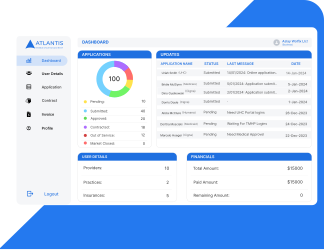
Real-Time Client Report Portal
Access real-time insights into your billing performance with our secure Client Report Portal.Track claims, payments, denials, and KPIs anytime—transparency at your fingertips.
Contact Us