Revenue Code 0116: The Clear Guide to Winning Detox Reimbursements

Revenue Code 0116 is one of the most misunderstood codes in inpatient detox billing. It may look simple on the UB-04 form, but it’s behind some of the most frequent detox claim denials in the US.
The issue isn’t the code itself, it's how your medical necessity documentation tells the story. If your chart doesn’t clearly show why a patient needed inpatient withdrawal management, payers will reject the claim.
Medicare, Medicaid, and commercial insurers all review detox claims closely. Detox admissions are high-risk and high-cost. Even a missing vital, a vague symptom note, or an unclear admission reason can destroy your reimbursement.
Stop Losing Revenue – Request a Medical Billing Audit Today!
What Revenue Code 0116 Really Means in Detox Billing?
Revenue Code 0116 is used when a patient is admitted to a private inpatient room for medically supervised detoxification.
This code shows the patient needed 24-hour monitoring, structured medical oversight, and continuous withdrawal management not outpatient or observation care.
Many facilities mistakenly think billing only the room and board is enough. The truth is, payers want context. Without proof that inpatient care was medically necessary, even a perfectly coded claim can be denied.
Understanding the difference between room and board billing versus clinical service billing is critical. Revenue Code 0116 communicates private room care, but its success depends entirely on how accurate and complete your clinical record is.
What Revenue Code 0116 Covers and What It Doesn’t?
Revenue Code 0116 covers the private room, meals, routine nursing monitoring, and general inpatient care materials used during the detox stay.
It does not cover therapy, lab testing, detox medications, or physician services, all of which must be billed separately.
Many inpatient detox billing errors happen when facilities mix routine care and specialized services on one line. Payers immediately flag these inconsistencies, leading to detox claim denials.
The safest approach is to separate “space and monitoring†charges from “clinical service†charges. Even when the patient truly needs inpatient withdrawal management, incomplete documentation can make care appear less urgent. Strong medical necessity documentation ensures your claim passes audits with confidence.
Why Detox Claim Denials Happen So Often with 0116?
Most denials occur because documentation is mismatched, diagnoses are vague, or withdrawal severity isn’t clearly recorded.
Payers want a compelling, medically necessary reason for private-room admission. Missing vitals, incomplete withdrawal scales, or generic physician notes suggest that a lower level of care might have sufficed.
Another common denial trigger is inconsistency. If your UB-04 billing guidelines show a private room but the chart indicates shared-room placement, the claim immediately becomes questionable.
Diagnosis codes must match the detox reason and describe the specific type of withdrawal. Without alignment, medical necessity falls apart.
Get Your Specialized Services ; Fix Detox Denials Fast!
How Payers Interpret Revenue Code 0116
Payers use Revenue Code 0116 to understand the intensity of a patient’s detox care. They approve claims only when your medical records show that outpatient detox or observation would have been unsafe.
Withdrawal scores, symptom details, and monitoring frequency all play a major role in inpatient detox billing.
Medicare bundles detox under MS-DRGs, so 0116 is included in the total stay payment and is not paid separately. Commercial insurers may pay per diem or a full case rate, depending on your contract. Medicaid rules vary by state, making strong medical necessity documentation essential for all claims.
Following practice management and medical credentialing best practices helps your team maintain accurate documentation and ensures 0116 claims get approved quickly.
How to Properly Use Revenue Code 0116 on a UB-04 Claim
Accuracy is everything when filing Revenue Code 0116 on a UB-04 form.
Field 42 must be precise. Any error in code placement or room type can cause instant delays or claim rejections.
Top facilities perform pre-submission checks to confirm that the chart, diagnosis codes, room assignment, and care notes all match. Your principal diagnosis should clearly show the exact reason for withdrawal, no vague terms like “substance use.†Supporting diagnoses must align with the clinical story.
When documentation and coding are consistent, payers can quickly see that inpatient detox care was medically necessary, helping secure fast, full reimbursement.
Secure Your Detox Reimbursements ; Talk to an Expert Today!
Why Documentation Defines the Success of 0116 Claims
Documentation is the backbone of inpatient detox billing.

Every note must prove that inpatient withdrawal management was the safest and most necessary approach. This includes withdrawal severity, unstable vitals, relapse history, high-risk behaviors, and hazards associated with outpatient detox attempts.
Strong documentation demonstrates continuous medical need, reducing challenges from payers. Even a solid detox protocol loses impact if notes lack specificity or fail to show care progression from admission to discharge. Your chart must tell a clear story of patient improvement under supervised detox.
The Role of Accurate DRGs in Detox Claims
After coding, your DRG must match the inpatient detox diagnosis.
If the DRG does not reflect withdrawal or complications, the claim becomes vulnerable. Medicare is strict about aligning DRGs with clinical documentation. This alignment heavily influences inpatient detox billing outcomes.
Proper DRG validation ensures your claim is accurate from both clinical and billing perspectives, preventing delays, audits, or underpayments.
Atlantis RCM for Seamless Detox Billing and 0116 Reimbursement
Revenue Code 0116 is simple only when documentation, coding, and billing work together.
Our team manages inpatient detox billing, denial recovery, documentation review, and compliance audits to ensure every claim is paid correctly.
With experts handling your medical billing and medical coding, you reduce risk, recover lost revenue, and avoid unnecessary payer audits.
Improve Your Detox Claim Success Today!
Get Your Specialized Services Now!
Our Services


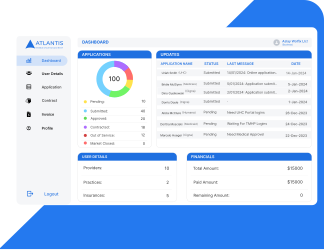
Real-Time Client Report Portal
Access real-time insights into your billing performance with our secure Client Report Portal.Track claims, payments, denials, and KPIs anytime—transparency at your fingertips.
Contact Us