Same Insurer Do Not Mean Same Plan: Provider’s Verification Workflow

A patient hands your front desk an insurance card from a payer your practice works with every day.
The name looks familiar. The workflow feels familiar.
Then the claim comes back unpaid.

The answer may be simple: the insurer is the same, but the patient's plan is not.
That difference can affect network status, benefits, authorization requirements, and how the claim needs to be handled. For providers, recognizing the payer is only the first step. The specific plan determines what happens next.
The Insurance Company Name Is Not Enough
Healthcare insurers often offer multiple plans under the same brand.
A provider may participate with one product while having different network arrangements with another. One plan may require authorization for a service while another does not.
So when a patient says, “I have Aetna,” “I have Humana,” or “I have UnitedHealthcare,” that information alone does not tell the practice everything it needs to know.

That is why Insurance Verification Services should go beyond checking whether coverage is active.
The goal is to identify the actual plan and understand what it means for the patient's upcoming service.
Active Coverage Does Not Answer Everything
One of the easiest mistakes is treating eligibility as a yes-or-no question.
A response showing active coverage does not automatically confirm that the provider is in-network, that the service is covered under the patient's benefits, or that authorization is unnecessary.
The better question is:
“What exactly is active, and what does this plan require?”
That is where detailed insurance eligibility verification becomes important.
The information collected before the appointment can determine whether the claim has a smooth path later.
Same Payer, Different Network
A practice may participate with an insurer but not every plan that insurer offers.
This distinction is particularly important when patients change jobs, switch coverage during enrollment periods, or move between different products offered by the same company.
The payer's name may remain unchanged while the provider's network status changes.
“We've accepted this payer for years. Why are we suddenly out of network?”
Because the relevant question is not whether the practice works with the insurer.
It is whether the practice participates in the patient's specific plan.
The Problem Often Starts Before the Claim
When a claim is denied, the billing department is usually the first place everyone looks.
But the actual problem may have started much earlier.
A patient's previous plan may still be stored in the practice system. The patient may have received a new card but assumed the insurer was unchanged. Staff may have checked general eligibility without confirming plan-specific details.
The claim then carries information that looks reasonable internally but does not match the payer's expectations.
This is why Medical Billing cannot be separated completely from accurate front-end verification.
Prior Authorization Can Change With the Plan
Authorization is another area where assumptions can create problems.
A service that does not require approval under one plan may require it under another. A staff member who remembers the payer's usual requirements may unknowingly apply the wrong rule.
“But we've never needed authorization for this service before.”
That may be true for the patient's previous plan.
It may not be true for the current one.
The Prior Authorization process therefore needs to be connected to the patient's actual plan rather than based solely on the insurer's name.
Patients Do Not Always Know Their Plan Changed
This creates another challenge for providers.
Patients may genuinely believe their insurance has not changed because the company name on the card is familiar.
They may not realize that they have moved into a different product with different network or benefit rules.
A patient might say:
“I still have the same insurance.”
The practice still needs to verify the current coverage.
Patient statements are useful, but they should not replace payer verification.
A Real-World Example
Imagine a specialty practice treating a patient regularly.
For months, the claims have been processed without a problem. The patient then moves to another plan offered by the same insurer.
Nothing appears unusual during scheduling.
The patient arrives, receives treatment, and the claim is submitted using the information already stored in the system.
Then the payer responds differently.
The claim may be rejected because the provider is not participating in that specific network. Another claim could require authorization that was never obtained.
“Nothing changed on our side. Why did the payer's response change?”
The answer may be sitting in the patient's plan information.
One Missed Detail Can Affect Multiple Claims
A single incorrect verification does not necessarily remain a single claim problem.
If a patient receives recurring services, the same outdated information can be used repeatedly. Now one missed plan change can produce several affected claims.
If multiple patients have moved into the same plan, the problem can become much larger.
That is when providers need to stop asking only, “How do we fix this claim?” and start asking, “Why are these claims failing?”
Denials Can Reveal a Verification Problem
Repeated denials involving the same payer or plan can indicate a workflow issue rather than individual billing mistakes.
Suppose several claims suddenly show similar eligibility or authorization problems.
Correcting each claim separately may get some money moving again, but it does not necessarily prevent the next batch.
The pattern deserves investigation.
“Are we fixing the claims or fixing what caused them?”
That distinction is at the heart of effective denial management.
What Should Providers Verify?
A strong verification process should answer several practical questions before the service is delivered.
What specific plan is active?
Is the provider in-network for that plan?
Is the service covered?
Does the service require authorization?
Are there plan-specific limitations?
Is the patient's insurance information current?
Are there special claim requirements?
The purpose is not to create more administrative work.
It is to identify problems while there is still time to do something about them.
Why Front-End Accuracy Matters
The earlier a coverage problem is discovered, the more options a practice has.
Staff can request updated information.
They can confirm network status.
They can obtain authorization where required.
They can communicate potential coverage issues with the patient.
Once the service has already been provided and the claim has been denied, those options become more complicated.
“Why discover the problem after treatment when we could have caught it before the appointment?”
That is the value of proactive verification.
The Hidden Cost of Getting It Wrong
An incorrect plan detail can create much more than a denied claim.
It can lead to payer calls, corrected claims, additional documentation, staff rework, delayed payments, patient questions, and unnecessary follow-up.
The financial impact can therefore extend beyond the original claim.
For a busy practice, repeated small problems can consume significant staff time.
What Providers Should Expect From Their Billing Partner
Providers should not have to rely on a billing partner that simply reports whether a claim was accepted or denied.
The team should be able to identify patterns and connect them to the workflow that created them.
A useful payer verification process should help answer:
Which plan does the patient actually have?
Is the provider participating?
Does the service require authorization?
Has anything changed since the patient's previous visit?
Those answers give the practice a much stronger starting point.
Verification Should Come Before the Problem
The most expensive time to discover a coverage issue is after the provider has already delivered care.
The appointment happened.
The clinical work is complete.
The documentation is finished.
Now the practice is trying to make the claim fit the payer's requirements.
A stronger workflow reverses that sequence.
Verify first.
Identify the requirements.
Then deliver and bill with better information.
Where Atlantis RCM Fits
At Atlantis RCM, we look beyond the insurance company's name to the details that can actually affect claim outcomes.
Our Claims Management approach connects verified payer information with the claims process, helping providers identify potential issues before they become recurring problems.
The goal is straightforward: reduce avoidable surprises by understanding the patient's actual plan before the claim reaches the payer.
Conclusion
The insurer's name on an insurance card is only part of the story.
The patient's specific plan can determine network participation, authorization requirements, benefits, and claim handling.
That is why providers should not stop at:
“Do we accept this insurance?”
The better question is:
“Do we accept this patient's specific plan, and do we know what it requires?”
Because the same insurer can mean very different things for two different patients.
Atlantis RCM helps providers verify the details behind the card before they become billing problems.
FAQs
1. Does accepting an insurance company mean a provider is in-network for every plan?
No. A provider can be in-network for one plan offered by an insurer and out-of-network for another. Network status needs to be confirmed for the patient's specific plan, not just the insurance company.
2. Is checking eligibility enough before seeing a patient?
Not always. Eligibility confirms that coverage is active, but providers may also need to verify the specific plan, network status, benefits, and whether the planned service requires authorization.
3. Can the same insurer have different prior authorization requirements?
Yes. Authorization requirements can vary by plan and service. A procedure that does not require authorization under one plan may require it under another, even when both plans are offered by the same insurer.
4. Why are claims suddenly being denied when the practice has billed the same payer successfully before?
A patient's coverage may have changed to a different plan within the same insurer. Other possibilities include changed network status, authorization requirements, eligibility information, or claim-routing rules. Repeated denials should be reviewed for a common plan-level issue rather than treated only as individual claim errors.
5. How often should providers reverify a patient's insurance?
Providers should reverify when a patient reports a coverage change, an appointment is rescheduled, the date of service changes, or there is a reason to believe the existing information may no longer be current. Coverage can change even when the insurer itself appears unchanged.
Our Services


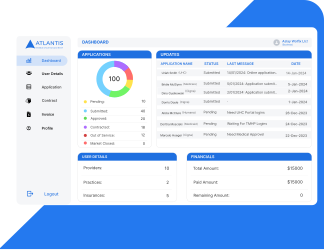
Real-Time Client Report Portal
Access real-time insights into your billing performance with our secure Client Report Portal.Track claims, payments, denials, and KPIs anytime—transparency at your fingertips.
Contact Us