The VMA Role Is Changing: Assistant to Workflow Coordinator

The role of a Virtual Medical Assistant is changing. Practices no longer need someone who simply answers calls, schedules appointments, or completes repetitive administrative tasks.
They need someone who can connect the dots.
A modern VMA can coordinate scheduling, patient communication, insurance checks, follow-ups, EHR updates, and other administrative workflows. The focus is shifting from completing isolated tasks to making sure the entire process keeps moving.
From Task-Taker to Workflow Coordinator
A traditional virtual assistant may receive a task, complete it, and move on.
A workflow coordinator looks at what happens next.
For example, scheduling a patient is only the first step. The patient's information may need verification, forms may need completion, authorization may need tracking, and reminders may need to be sent.
The VMA helps keep these connected instead of leaving each step to a different person.
Why Medical Practices Are Moving Beyond Basic VMA Support
Healthcare administration rarely follows a straight line.
A missed call can become a missed appointment. An incomplete insurance check can create a billing issue. A forgotten referral follow-up can leave a patient waiting.
This is why modern Virtual Medical Assistant Services are becoming more workflow-driven. The goal is to prevent small administrative gaps from becoming larger operational problems.
The Appointment Is Booked. Now what?
Booking an appointment does not mean the administrative work is finished.
A VMA can support the steps that follow, including patient confirmations, reminders, cancellations, rescheduling, documentation, and communication.
This makes Patient Scheduling Services more than calendar management. They become part of a smoother patient access process.
The Front Desk Can Affect Your Revenue Cycle
What happens before a patient sees the provider can influence what happens after the visit.
Incorrect demographics, incomplete insurance information, missing referrals, or unresolved authorization requirements can create problems further down the revenue cycle.
A VMA can help collect and organize this information before it becomes someone else's problem.
This creates a stronger connection with Revenue Cycle Management and gives billing teams cleaner information to work with.
Insurance Verification Is Becoming More Than a Coverage Check
“Insurance active” does not always mean “everything is covered.”
Practices may also need to consider benefits, network requirements, referrals, and authorization requirements.
A VMA can help manage these administrative checks and keep outstanding items visible.
For practices with complex authorization workflows, Prior Authorization support can help keep requests, documentation, and follow-ups organized.
What Happens After the Patient Leaves?
This is where many administrative tasks quietly disappear.
A patient may need another appointment. A referral may need follow-up. A document may still be missing. A message may require a response.
A workflow-focused VMA helps make sure these tasks have an owner and a next step.
The result is better continuity instead of a growing list of “someone needs to follow up” tasks.
Where the VMA Meets Medical Billing
A VMA does not replace professional billers or coders.
Instead, the VMA can support the administrative information surrounding the billing process, including patient details, documentation follow-ups, communication, and unresolved administrative issues.
When specialized billing expertise is required, practices can rely on dedicated Medical Billing support while the VMA keeps related administrative workflows moving.
Is AI Replacing the VMA?
Not exactly.
AI can handle certain repetitive activities, but healthcare still requires human judgment, communication, follow-up, and escalation.
The stronger model is VMA + technology.
Automation can handle appropriate routine work, while trained Virtual Medical Assistants manage exceptions, communicate with patients, and make sure tasks do not stop when an automated workflow reaches its limit.
Why Human Oversight Still Matters
A healthcare practice needs more than automated task completion. Patient communication, follow-ups, insurance coordination, and administrative exceptions often require judgment, attention, and human interaction.
A trained Virtual Medical Assistant can recognize when a task needs clarification, communicate with patients and staff, and follow through until an issue is resolved. This human coordination is what turns remote administrative support into dependable workflow management.
What Should a Modern VMA Actually Manage?
A modern VMA should do more than complete isolated administrative tasks. The role should connect key workflows, keep pending tasks moving, and support your practice team where administrative gaps are most likely to occur.
A workflow-focused VMA may support:
Patient scheduling and appointment coordination
Patient communication and follow-ups
Insurance verification and administrative checks
Referral and authorization tracking
EHR and EMR administrative updates
Patient forms and documentation follow-up
Front-office administrative support
Billing-related administrative coordination
The difference is not simply how many tasks a VMA handles. It is how effectively those tasks connect.
Signs Your Practice Needs Workflow-Focused VMA Support
When administrative tasks start slowing down your team, the problem may not be a lack of staff, it may be a lack of workflow coordination.
Atlantis RCM’s Virtual Medical Assistant Services help connect everyday administrative tasks so your practice can operate with fewer gaps and less staff burden.
Your Staff Are Stuck in Administrative Tasks
Medical Practice Administrative Support from Atlantis RCM helps reduce repetitive work such as scheduling, patient communication, documentation follow-ups, and routine coordination.
Patients Are Waiting Too Long for Responses
With Patient Scheduling Services and dedicated Healthcare Administrative Support, Atlantis RCM helps practices respond to patient requests faster and keep communication from falling through the cracks.
Follow-Ups Are Being Missed
Our Virtual Medical Assistants can manage appointment reminders, patient follow-ups, referrals, and pending tasks so your team has fewer loose ends to chase.
Insurance Tasks Keep Piling Up
Atlantis RCM provides Insurance Verification Services to help practices organize coverage checks, payer requirements, and related administrative workflows.
Clinical Staff Are Doing Administrative Work
Virtual Medical Assistant Solutions can take routine administrative responsibilities away from clinical teams, allowing providers and clinical staff to stay focused on patient care.
Your Workflow has Too Many Gaps
Remote Medical Administrative Support from Atlantis RCM can connect scheduling, patient communication, insurance coordination, and follow-up tasks under a more structured workflow.
A VMA Can Strengthen the Entire Practice Workflow
The future of Virtual Medical Assistants is not about simply adding another remote employee.
It is about creating clear ownership for the administrative work that keeps a practice functioning.
A well-structured VMA can connect patient communication, scheduling, insurance processes, documentation, and billing-related workflows while supporting broader Practice Management goals.
Conclusion:
With the right structure, Virtual Medical Assistant Services can help practices reduce administrative gaps, improve patient coordination, and keep daily operations moving.
Ready to strengthen your practice workflow?
Explore Atlantis RCM's Virtual Medical Assistant Services.
Frequently Asked Questions
How much does it cost to hire a Virtual Medical Assistant?
The cost depends on the responsibilities, hours, specialty, and level of support your practice needs. Instead of hiring for a fixed list of tasks, Atlantis RCM can structure VMA support around your actual workflow and administrative requirements.
How much does it cost to hire a VMA in the USA?
Pricing varies based on whether you need part-time, full-time, specialized, or multi-function support. A U.S. practice should compare the total cost against the administrative workload being handled, including scheduling, patient communication, insurance tasks, and follow-ups.
What does a Virtual Medical Assistant do?
A VMA can manage administrative responsibilities such as scheduling, patient communication, insurance verification, referral tracking, EHR updates, documentation follow-ups, and other non-clinical workflows.
Can a VMA work with our existing staff?
Yes. A VMA is designed to complement your current team rather than replace everyone. They can take ownership of repetitive administrative work while your in-house staff focus on higher-priority responsibilities.
Can a VMA handle insurance verification and prior authorization?
Yes, depending on the service arrangement and practice requirements. A VMA can support insurance verification, track authorization requests, organize documentation, and follow up on pending administrative requirements.
Is a Virtual Medical Assistant suitable for small medical practices?
Absolutely. Small practices often have limited administrative capacity, making workflow-focused VMA support particularly useful. A VMA can provide flexible administrative coverage without requiring the practice to build a larger in-house team.
Our Services


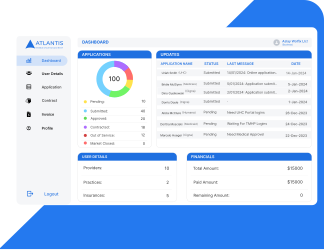
Real-Time Client Report Portal
Access real-time insights into your billing performance with our secure Client Report Portal.Track claims, payments, denials, and KPIs anytime—transparency at your fingertips.
Contact Us