Understanding RARC Codes in Medical Billing: Decode Denials and Recover More Revenue

Claim denials rarely happen without an explanation, but understanding that explanation is often where healthcare providers struggle. Every denied or adjusted claim includes valuable information that points to the reason behind delayed or reduced reimbursement. Unfortunately, many practices overlook these details, allowing the same billing issues to repeat month after month.
This is where RARC Codes in Medical Billing become essential. These standardized codes provide additional information about claim adjustments, payment decisions, and payer requirements that cannot be explained through adjustment codes alone. When billing teams understand how to interpret these codes, they can resolve denials faster, improve claim accuracy, and reduce unnecessary revenue loss.
Whether your practice manages billing internally or partners with a professional billing company, understanding RARC codes can significantly improve denial management services and strengthen your overall revenue cycle.
What Are RARC Codes in Medical Billing?
Healthcare providers receive thousands of Electronic Remittance Advice (ERA) files every year. These files contain payment information, claim adjustments, and explanations from insurance payers regarding processed claims.
RARC Codes in Medical Billing, short for Remittance Advice Remark Codes, provide additional details about how a claim was processed. They explain situations that cannot be fully described through payment adjustments alone, helping billing teams understand what happened to a claim after adjudication.
Unlike payment amounts or adjustment values, remark codes offer context. They may indicate that supporting documentation is missing, additional information is required, certain services have been bundled, or a payer policy has influenced reimbursement.
Rather than viewing them as technical billing codes, providers should consider them communication tools between insurance companies and healthcare organizations.
Why Do RARC Codes Matter?
Many denied or partially paid claims are corrected without investigating why they occurred in the first place. While this may temporarily resolve an issue, it often leads to recurring denials that consume valuable staff time and delay reimbursement.
Understanding RARC Codes in Medical Billing allows billing professionals to identify patterns instead of treating every denial as an isolated event.
For example, if multiple claims repeatedly include the same remark code, it may indicate incomplete documentation, incorrect claim formatting, missing prior authorizations, or payer-specific billing requirements. Identifying these trends enables practices to improve workflows rather than continually correcting the same errors.
Over time, this proactive approach supports stronger denial management, improved reimbursement accuracy, and healthier financial performance.
How RARC Codes Differ from CARC Codes
Although CARC and RARC Codes often appear together, they serve different purposes. CARC codes explain why a claim was denied, reduced, or adjusted, while RARC codes provide additional details about the payer's decision and any required next steps.
Understanding both helps billing teams resolve denials more efficiently and supports accurate medical billing services by improving claim correction and appeals.
Where Billing Teams Encounter RARC Codes
Most providers interact with remark codes without fully recognizing their importance. They commonly appear within Electronic Remittance Advice (ERA) transactions after insurance companies process submitted claims.
Billing specialists review these remittance files during payment posting to determine how claims have been reimbursed and whether follow-up action is required.
Depending on the payer's decision, remark codes may indicate missing documentation, claim processing limitations, coordination of benefits issues, medical necessity concerns, or requests for additional clinical information.
Common Situations Where RARC Codes Are Used
Although every insurance payer follows standardized coding guidelines, remark codes are used in a wide variety of claim scenarios.
Healthcare providers frequently encounter them when claims require additional documentation, prior authorization records, corrected billing information, or clarification regarding services performed.
Remark codes may also explain payment reductions resulting from payer policies, bundled procedures, coordination of benefits, frequency limitations, or administrative processing requirements.
Rather than indicating permanent denials, many of these situations simply require billing teams to submit additional information or correct existing claim details.
Recognizing this distinction helps providers prioritize appeals, corrections, and follow-up activities more effectively.
How RARC Codes Improve Denial Management
Successful denial management depends on understanding why claims fail before attempting to correct them. Simply resubmitting denied claims without reviewing payer explanations often results in repeated rejections and unnecessary administrative work.
Analyzing RARC Codes in Medical Billing provides valuable insight into recurring denial trends across providers, specialties, procedures, and insurance companies.
Instead of reacting to every denial individually, organizations begin preventing denials before claims reach the payer.This shift from reactive billing to proactive revenue cycle management improves reimbursement speed while reducing operational costs.
Why Billing Teams Should Monitor Remark Code Trends
Individual claim explanations are useful, but their real value becomes apparent when analyzed collectively.
Repeated appearance of the same remark code often signals an underlying process issue rather than isolated billing mistakes.
Monitoring trends allows healthcare organizations to improve staff training, strengthen documentation standards, enhance coding accuracy, and refine claim submission procedures.
Over time, remark code analysis becomes an important performance indicator that supports continuous revenue cycle improvement while reducing preventable reimbursement delays.
How to Respond to RARC Codes Effectively
Receiving a remark code does not always mean a claim has reached the end of the reimbursement process. In many cases, it simply highlights information that needs to be corrected, verified, or submitted before payment can be finalized.
The first step is to review the associated Claim Adjustment Reason Code and the accompanying remark code together. This provides a complete picture of the payer's decision and helps determine the most appropriate next step.
Once the issue has been identified, billing teams should compare the payer's explanation with the patient's documentation, coding, authorization records, and claim details. If additional information is required, it should be submitted promptly to avoid unnecessary reimbursement delays.
Responding quickly not only improves collection timelines but also reduces the likelihood of repeated claim rejections.
Common Categories of RARC Codes
Rather than memorizing hundreds of individual codes, billing teams benefit more from understanding the types of issues these codes typically represent.
Many remark codes relate to incomplete documentation, requests for additional medical records, prior authorization requirements, billing corrections, coordination of benefits, medical necessity reviews, or payer-specific administrative policies.
Some codes simply provide informational messages, while others require immediate corrective action before payment can be released.
Recognizing these categories allows billing staff to establish standardized workflows that improve claim resolution and minimize unnecessary follow-up.
Common Mistakes Providers Make When Reviewing Remittance Advice
Many reimbursement delays occur not because billing teams fail to submit claims correctly, but because they overlook the explanations provided after claims are processed.
One common mistake is focusing only on payment amounts while ignoring the accompanying remarks. Another is correcting individual claims without investigating whether the same issue appears across multiple providers or payers.
Some practices also rely solely on manual reviews, making it difficult to identify recurring denial trends or operational inefficiencies.
Integrating remark code analysis into routine payment posting and denial management helps transform remittance advice from a payment record into a valuable performance improvement tool.
Best Practices for Managing RARC Codes
Healthcare organizations that consistently reduce denials typically treat remittance analysis as an ongoing process rather than an occasional task.
Billing teams should regularly review recurring remark code trends, update internal billing procedures when payer requirements change, and educate staff on the most frequently encountered explanations. Periodic Medical Billing Audits also help identify workflow gaps that contribute to recurring claim issues.
A proactive approach reduces administrative burden while supporting stronger reimbursement outcomes over time.
How Professional Medical Billing Services Improve Denial Resolution
Managing claim denials has become increasingly complex as payer requirements continue to evolve. Healthcare providers must keep pace with changing billing regulations, documentation standards, coding updates, and reimbursement policies, all while maintaining day-to-day patient care.
By combining expertise with ongoing performance monitoring, experienced billing partners help practices improve collections, reduce preventable denials, and maintain a healthier revenue cycle.
Why Understanding RARC Codes Supports Long-Term Revenue Growth
Every remittance advice contains valuable information about how payers evaluate submitted claims. When healthcare organizations understand and apply these insights, they move beyond simply processing payments and begin improving the quality of their billing operations.
Consistent analysis of payer explanations leads to better documentation, stronger coding practices, more accurate claim submission, and faster reimbursement. Over time, these improvements contribute to fewer denials, greater operational efficiency, and more predictable cash flow.
Rather than viewing remark codes as technical billing details, practices should recognize them as practical tools for continuous revenue cycle improvement.
Conclusion
Understanding RARC Codes in Medical Billing helps healthcare providers identify the reasons behind claim denials and payment adjustments.
By acting on these insights, practices can reduce denials, improve reimbursements, and strengthen their revenue cycle.
Improve Claim Resolution with Atlantis RCM
Don't let claim denials and payer remarks impact your cash flow. Atlantis RCM helps healthcare providers identify denial trends, improve reimbursement accuracy, and strengthen revenue cycle performance.
Schedule your Free Medical Billing Audit today and discover how Atlantis RCM can help you reduce denials, recover lost revenue, and maximize reimbursements.
Our Services


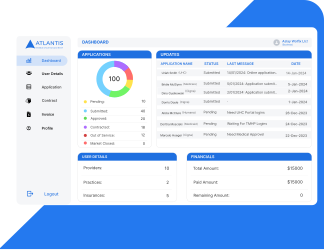
Real-Time Client Report Portal
Access real-time insights into your billing performance with our secure Client Report Portal.Track claims, payments, denials, and KPIs anytime—transparency at your fingertips.
Contact Us