What’s Inside a Medical Billing Audit?

Medical billing mistakes are not always obvious. A claim may be paid without issue while another is denied for reasons that trace back to registration, documentation, coding, or payer compliance. These hidden problems often remain unnoticed until they begin affecting revenue, increasing accounts receivable, or triggering compliance concerns.
By understanding what a comprehensive audit includes, providers can make informed decisions that improve financial performance while maintaining billing accuracy.
Why a Medical Billing Audit Reviews the Entire Revenue Cycle
Many providers assume a Medical Billing Audit begins when a claim is submitted. In reality, the audit starts much earlier because reimbursement depends on every step that occurs before billing even begins.
Patient information, insurance verification, clinical documentation, coding accuracy, charge capture, claim submission, payment posting, and denial management all influence the final reimbursement. An error at any point can create a chain reaction that leads to claim denials, delayed payments, compliance concerns, or lost revenue.
A thorough Revenue Cycle Audit follows the complete lifecycle of a patient encounter, evaluating each process individually while also determining how well every department works together. Instead of identifying isolated mistakes, auditors focus on recurring patterns that reveal operational weaknesses affecting overall financial performance.
Patient Registration Is the First Component of Every Medical Billing Audit
Patient registration lays the foundation for an accurate claim. Even minor registration mistakes can create billing issues throughout the revenue cycle.
During the Medical Billing Audit Process, auditors review whether patient information is complete, accurate, and properly documented before services are provided.
The review typically includes:
Patient demographics
Insurance information
Guarantor details
Prior authorizations
Subscriber information
Incorrect policy numbers, outdated insurance details, or simple data entry errors often result in claim rejections that could have been prevented at the registration stage.
Insurance Verification Determines Whether Claims Are Billable
Insurance verification goes far beyond confirming active coverage. It ensures the claim meets payer requirements before treatment begins.
A professional Medical Billing Audit Company evaluates whether verification procedures are consistent, complete, and compliant.
Auditors review:
Eligibility verification
Benefits confirmation
Prior authorizations
Referral requirements
Coordination of benefits
Improving this process helps reduce preventable denials while increasing first-pass claim acceptance.
Clinical Documentation Supports Every Claim Submitted
Accurate documentation is the evidence behind every reimbursement. Without complete clinical records, even correctly coded claims may be denied.
As part of a Medical Billing and Coding Audit, auditors compare provider documentation with submitted claims to identify inconsistencies.
The review focuses on:
Medical necessity
Diagnosis documentation
Procedure details
Treatment notes
Time-based documentation where required
Strong documentation improves coding accuracy, supports compliance, and reduces reimbursement delays.
Coding Accuracy Is One of the Most Important Parts of the Audit
Medical coding directly affects reimbursement, compliance, and claim acceptance. Small coding mistakes repeated across multiple claims can result in significant revenue loss.
During the audit, certified reviewers evaluate coding accuracy against current payer requirements and clinical documentation.
The review includes:
CPT, ICD-10-CM, and HCPCS coding
Modifier usage
Diagnosis sequencing
Documentation support
Coding consistency
Auditors also identify trends such as upcoding, downcoding, duplicate billing, unbundling, and unsupported services. These findings become a key part of the final Medical Billing Audit Report, helping practices improve billing accuracy while maintaining compliance.
Charge Capture Ensures Every Billable Service Is Accounted For
Not every revenue loss comes from denied claims. Many practices lose reimbursement because billable services are never captured in the first place.
A Medical Billing Audit reviews the charge capture process to ensure every eligible service reaches the billing system.
Auditors evaluate:
Missing charges
Delayed charge entry
Documentation-to-charge matching
Workflow consistency
Department communication
Improving charge capture reduces missed revenue opportunities and strengthens overall Revenue Cycle Management without increasing patient volume.
Claim Preparation Determines First-Pass Acceptance
Accurate coding alone isn't enough. Claims must also meet payer-specific requirements before they are submitted for reimbursement.
A Medical Billing Audit evaluates the claim preparation process to ensure every claim is complete, accurate, and ready for first-pass acceptance.
The review includes:
Claim completeness and accuracy
Payer-specific formatting requirements
Electronic claim edits and scrubbing
Attachment management
Timely filing compliance
Even properly coded claims can be rejected if required information is missing or filing deadlines are missed. Strengthening claim preparation helps reduce rework, improve first-pass acceptance rates, and accelerate reimbursement.
Claim Denial Analysis Reveals Patterns That Cost Practices Revenue
A denied claim is rarely an isolated issue. It often signals recurring problems somewhere within the revenue cycle.
A Medical Billing Audit analyzes denial trends to uncover the root causes behind repeated reimbursement delays.
The review focuses on:
Coding inaccuracies and modifier errors
Insurance eligibility and authorization issues
Missing or insufficient documentation
Payer-specific billing requirements
Denial trends by provider, specialty, or payer
By identifying patterns instead of individual claims, practices can reduce future denials, improve clean claim rates, and strengthen denial management strategies.
Payment Posting Accuracy Confirms Every Dollar Is Accounted For
Accurate payment posting ensures financial records reflect the true performance of your billing operations.
During a Medical Billing Audit, auditors verify that every payment is correctly applied and reconciled.
The review includes:
EOB and ERA reconciliation
Contractual adjustments
Patient balances
Secondary insurance payments
Credit balances and write-offs
Correct payment posting improves financial reporting, uncovers underpayments, and ensures practices receive the reimbursement they have earned.
Accounts Receivable Performance Reflects Billing Efficiency
Outstanding accounts receivable directly impact cash flow. The longer claims remain unpaid, the more difficult they become to recover.
A Revenue Cycle Audit evaluates how effectively outstanding balances are being managed.
Auditors assess:
Aging reports
Follow-up timelines
High-value unpaid claims
Payer reimbursement delays
Collection workflows
Strong AR management improves collections, reduces write-offs, and supports healthier cash flow across the practice.
Revenue Leakage Often Occurs Without Obvious Billing Errors
Not every financial loss appears as a denied claim. Many practices unknowingly lose revenue through small operational inefficiencies.
A comprehensive Medical Billing Audit helps identify hidden opportunities to recover revenue.
Common findings include:
Missed billable services
Underpayments
Outdated fee schedules
Incorrect contractual adjustments
Services documented but never billed
Addressing revenue leakage allows healthcare organizations to maximize reimbursement without increasing patient volume.
Compliance Reviews Protect Both Revenue and Reputation
Regulatory compliance is essential for maintaining financial stability and reducing organizational risk.
A Medical Billing Compliance Audit evaluates whether billing practices align with current healthcare regulations and payer requirements.
The review covers:
HIPAA compliance
Documentation support
Coding guideline adherence
Medicare and Medicaid requirements
Commercial payer policies
Maintaining compliance helps reduce audit risk while protecting both revenue and organizational credibility.
Revenue Cycle Metrics Measure the Success of Billing Operations
Every successful billing department relies on measurable performance indicators. Reviewing revenue cycle metrics helps practices understand what is working and where improvements are needed.
As part of the Medical Billing Audit Process, auditors evaluate clean claim rates, denial percentages, days in accounts receivable, net collections, and reimbursement timelines. These insights support better operational decisions and continuous improvement across the revenue cycle.
A Medical Billing Audit Report Should Drive Continuous Improvement
A quality Medical Billing Audit Report does more than identify billing issues, it provides a practical roadmap for long-term improvement. By highlighting the causes of revenue loss and recommending corrective actions, the report helps healthcare organizations strengthen workflows, improve reimbursement, and enhance overall billing performance.
Why Regular Medical Billing Audits Matter
Healthcare billing requirements continue to evolve, making routine audits essential for maintaining financial health. Regular Medical Billing Audits help practices identify problems early, improve compliance, reduce claim denials, and optimize Revenue Cycle Management before small issues become significant revenue losses.
Conclusion
A Medical Billing Audit evaluates every stage of the revenue cycle from patient registration and insurance verification to coding, compliance, payment posting, and collections. By identifying operational weaknesses early, healthcare organizations can reduce denials, improve reimbursement accuracy, strengthen compliance, and build a more efficient billing process that supports long-term financial success.
Improve Your Billing Performance with a Professional Medical Billing Audit
Billing challenges aren't always visible until they begin affecting revenue. Atlantis RCM delivers comprehensive Medical Billing Audit services that identify revenue leakage, coding issues, compliance risks, and workflow inefficiencies across your entire billing operation.
Whether you're experiencing rising denials, increasing accounts receivable, or declining collections, our experts can help you uncover opportunities to improve reimbursement and optimize your revenue cycle.
Request your Free Medical Billing Audit today and discover how Atlantis RCM can help maximize revenue, reduce denials, and strengthen your billing performance.
Our Services


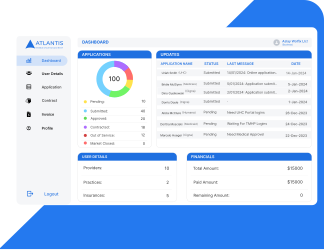
Real-Time Client Report Portal
Access real-time insights into your billing performance with our secure Client Report Portal.Track claims, payments, denials, and KPIs anytime—transparency at your fingertips.
Contact Us