Why Revenue Cycle Performance Has Become a Strategic Priority

Every patient visit involves multiple financial steps, from insurance verification and coding to claim submission and payment. When any stage breaks down, reimbursements slow and revenue is affected.
Understanding Primary Care Revenue Cycle Challenges in 2026 helps practices strengthen operations, improve efficiency, and protect long-term financial performance.
Challenge 1: Increasing Administrative Complexity
Billing requirements are becoming more demanding every year.
Frequent payer updates, changing documentation standards, and limited administrative resources make it difficult for practices to maintain consistent billing accuracy. Even small registration or documentation mistakes can interrupt the reimbursement process.
These seemingly minor issues often contribute to hidden revenue leakage, creating financial losses that accumulate over time.
Challenge 2: Eligibility Verification Remains a Front-End Weakness
Financial success often depends on what happens before the patient enters the exam room.
Incomplete insurance verification can lead to rejected claims, unexpected patient balances, delayed reimbursements, and unnecessary administrative work. Staff members then spend valuable time correcting avoidable errors instead of focusing on efficient billing operations.
A stronger front-end process creates cleaner claims and a more predictable payment cycle.
Challenge 3: Documentation Quality Directly Affects Reimbursement
Clinical documentation is no longer just a compliance requirement, it directly influences reimbursement.
Incomplete records can lead to coding discrepancies, additional payer reviews, and delayed payments. Accurate documentation supports coding accuracy, reduces claim errors, and improves reimbursement consistency.
When providers document encounters thoroughly, billing teams can process claims with greater confidence and fewer delays.
Challenge 4: Denials Continue to Drain Revenue
Many practices devote significant time to appealing denied claims instead of preventing them.
Most claim denials management stem from recurring issues such as inaccurate patient information, documentation gaps, coding mistakes, eligibility problems, or missed filing deadlines. These preventable errors slow payments and increase administrative expenses.
A proactive denial management strategy helps practices reduce rework, improve reimbursement timelines, and strengthen overall financial performance.
Challenge 5: Rising Patient Financial Responsibility
As healthcare costs continue to shift, patients are responsible for a larger share of their medical expenses. Collecting these balances has become one of the biggest financial challenges for primary care practices.
Without clear billing communication and timely follow-up, outstanding balances continue to grow. Improving patient collections through transparent payment policies, digital payment options, and consistent communication helps practices recover revenue while maintaining a positive patient experience.
Challenge 6: Accounts Receivable Continues to Grow
Outstanding claims can quickly affect the financial stability of a practice.
When claims remain unpaid for extended periods, practice cash flow slows, making it more difficult to manage daily operations, invest in technology, or expand services. Delayed follow-ups, unresolved payer issues, and inconsistent payment tracking all contribute to increasing accounts receivable.
Strong accounts receivable management ensures unpaid claims are monitored, followed up promptly, and resolved before they become long-term revenue losses.
Challenge 7: Prior Authorization Delays
Obtaining approvals before treatment has become increasingly time-consuming.
Missing information, changing payer requirements, or delayed responses can postpone patient care and slow reimbursement. Every delay creates additional administrative work while increasing the likelihood of payment issues.
Establishing standardized workflows for prior authorization services helps reduce processing delays and keeps the billing cycle moving efficiently.
Challenge 8: Staffing Challenges Continue to Impact Billing Performance
Many primary care practices are operating with lean administrative teams while managing increasing workloads.
Limited staffing often leads to delayed claim submissions, slower follow-ups, documentation backlogs, and inconsistent billing processes. As a result, reimbursement timelines become longer and operational costs continue to rise.
Creating standardized workflows and partnering with experienced medical billing services allows practices to improve efficiency without placing additional pressure on internal teams.
Key Revenue Cycle Metrics Every Practice Should Monitor
Financial performance cannot improve without measuring the right indicators.
Regularly monitoring key revenue cycle metrics helps practices identify problems before they become significant financial losses. Important performance indicators include first-pass claim acceptance rates, denial percentages, reimbursement turnaround time, days in accounts receivable, collection rates, and payment trends.
Routine performance reviews also make it easier to identify operational gaps that contribute to ongoing reimbursement delays.
How Primary Care Practices Can Strengthen Financial Performance
Improving revenue cycle performance requires attention at every stage of the patient journey.
Practices should focus on verifying insurance coverage before appointments, maintaining accurate patient records, strengthening documentation quality, submitting clean claims, monitoring reimbursement trends, and reviewing billing performance on a regular basis.
Many organizations also benefit from conducting a medical billing audit to uncover hidden inefficiencies, reduce billing errors, and improve financial outcomes. Consistent process improvement helps build a more resilient revenue cycle while supporting long-term growth.
Looking Ahead
The Primary Care Revenue Cycle Challenges in 2026 are not temporary obstacles, they reflect an increasingly complex reimbursement environment. Practices that continue relying on outdated billing processes may experience more payment delays, higher denial rates, and ongoing revenue loss.
By strengthening front-end operations, improving documentation, optimizing follow-up processes, and investing in proactive revenue cycle management, healthcare providers can create a more efficient financial workflow that supports both operational stability and quality patient care.
Conclusion
The Primary Care Revenue Cycle Challenges in 2026 require proactive billing strategies, not reactive fixes.
Atlantis RCM helps practices reduce denials, improve reimbursements, and strengthen financial performance. Partner with Atlantis RCM to build a healthier revenue cycle.
Our Services


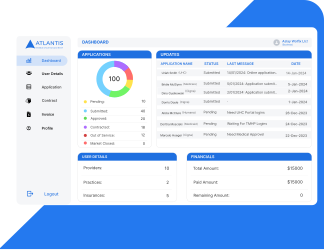
Real-Time Client Report Portal
Access real-time insights into your billing performance with our secure Client Report Portal.Track claims, payments, denials, and KPIs anytime—transparency at your fingertips.
Contact Us