10 Tasks You Are Wasting Time On (And How a VA Can Help)
Every healthcare practice has the same hidden problem: highly trained providers are spending too much time on work that someone else could handle.
Between ringing phones, appointment changes, insurance verification, patient follow-ups, and documentation, administrative tasks quietly consume hours every day. The result is staff burnout, scheduling gaps, delayed reimbursements, and less time for patient care.
If your team constantly feels busy but never caught up, the issue may not be a lack of effort, it may be a lack of delegation.

The Productivity provider loses
“Most practices are paying clinical staff to perform administrative work.
That means higher payroll costs, lower productivity, and frustrated employees.
The good news: many of these tasks can be delegated safely and efficiently through Virtual Medical Assistance Services”.
Why Healthcare Practices Are Turning to Virtual Medical Assistance Services
Healthcare administrators are under pressure to do more with fewer resources. Hiring additional in-house staff is expensive, training takes time, and turnover can disrupt operations.
A Healthcare Virtual Assistant gives practices access to trained administrative support without the overhead of another full-time employee. From scheduling and patient communication to documentation support and insurance verification, virtual assistants help practices regain control of their workflows.
Task #1: Answering Routine Patient Calls
Front-desk teams spend a surprising amount of time answering the same questions: office hours, appointment availability, prescription requests, directions, and insurance inquiries.
These interruptions may seem small, but together they can consume several hours each day. A Medical Virtual Assistant can handle routine calls, route urgent issues appropriately, and ensure patients receive timely responses.
When staff are no longer tied up on the phone, they can focus on patient-facing responsibilities that require in-person attention.
Task #2: Appointment Scheduling and Rescheduling
Scheduling is one of the biggest operational pain points in healthcare. Double bookings, cancellations, and no-shows can quickly disrupt a provider's day.
Virtual assistant can manage calendars, send reminders, coordinate reschedules, and fill open slots before revenue is lost. Practices that use Virtual Medical Assistant Services for scheduling often see smoother workflows and better appointment utilization.
Free VMA Consultation
“Not sure which administrative tasks are consuming the most time in your practice?
Our VMA specialists can help identify scheduling, communication, and workflow bottlenecks that are reducing productivity”
Task #3: Insurance Eligibility Verification
Eligibility errors are one of the most common causes of delayed payments and denied claims. Verifying coverage manually takes time and requires careful attention to detail.
A HIPAA-Compliant Virtual Medical Assistant can confirm patient coverage, validate demographic information, identify authorization requirements, and document benefits before the visit.
Accurate verification reduces surprises for patients and helps billing teams work more efficiently.
Task #4: Patient Intake Management
Paper forms, missing documents, and incomplete records create unnecessary delays at check-in.
Virtual assistants can send digital intake forms in advance, collect required documentation, verify information, and organize records before the patient arrives. This creates a smoother experience for both patients and staff.
Many practices find that improved intake workflows reduce wait times and help appointments start on schedule.
Task #5: Prior Authorization Follow-Up
Prior authorizations are often one of the most frustrating administrative responsibilities in healthcare. Staff may spend hours contacting payers, submitting documentation, and checking approval status.
A virtual assistant can monitor authorization requests, follow up with insurance companies, collect supporting documentation, and keep providers informed about pending approvals.
Delegating this task helps prevent treatment delays and reduces administrative stress.
Atlantis RCM VMA Workflow Assessment
Our workflow review identifies which tasks should stay in-house and which can be safely delegated to a virtual assistant.
The goal is simple: reduce administrative burden while improving operational efficiency.
Task #6: EHR Documentation Support
Many providers spend evenings catching up on documentation that should have been completed during the workday.
While clinical decision-making always remains with the provider, a virtual assistant can support administrative documentation tasks such as record updates, chart preparation, and data entry. This reduces clerical workload and gives providers more time for patient care.
Better documentation workflows can also support downstream processes related to medical coding, helping improve accuracy and consistency.
Task #7: Patient Follow-Ups and Recall Management
Missed follow-ups affect both patient outcomes and practice revenue. When patients forget to return, providers lose continuity of care and schedules develop gaps.
A virtual assistant can call patients after visits, send reminders, schedule follow-up appointments, and help maintain recall lists. Consistent outreach improves patient engagement and encourages timely return visits.
For many practices, this is one of the easiest ways to recover missed revenue opportunities.
Task #8: Administrative Support for Medical Billing
Billing teams often spend significant time gathering patient information, resolving demographic issues, and tracking claim-related communications.
A Virtual Medical Assistant for Medical Billing can support these administrative workflows by organizing documentation, confirming patient details, and coordinating information between departments.
Although specialized billing professionals handle claims submission, strong administrative support helps reduce delays and keeps the billing process moving efficiently.
Task #9: Outstanding Balance and AR Follow-Up
Following up on unpaid balances requires consistency and organization. When staff are overwhelmed, these activities often fall behind.
Virtual assistants can help maintain follow-up schedules, organize account notes, and support workflows related to AR management. This improves visibility into outstanding balances and helps practices stay on top of collections activities.
Even small improvements in follow-up consistency can have a meaningful impact on cash flow.
Task #10: Email and Administrative Inbox Management
Healthcare teams receive a constant stream of appointment requests, patient questions, insurance correspondence, vendor emails, and internal messages.
A virtual assistant can monitor inboxes, prioritize urgent requests, respond to routine inquiries, and keep administrative communication organized. This reduces interruptions throughout the day and helps staff focus on higher-value work.
For many practice managers, inbox management alone can save several hours each week.
How Virtual Medical Assistance Services Improve Practice Profitability
The biggest benefit of delegation is not simply saving time, it is creating capacity for growth.
When providers and in-house staff spend less time on repetitive administrative work, they can focus on patient care, scheduling optimization, and practice development. Over time, this can lead to better patient satisfaction, stronger staff morale, and healthier financial performance.
Many organizations combine Virtual Medical Assistance Services with broader Revenue Cycle Management Services to create a more efficient workflow from scheduling through reimbursement.
What practices often notice after delegating administrative work
Fewer scheduling gaps and no-shows
Less front-desk overload
Faster insurance verification
Better patient communication
Reduced staff burnout
More time for revenue-generating activities
Atlantis RCM VMA Strategies Overview
At Atlantis RCM, our virtual medical assistant solutions are designed specifically for healthcare practices. We focus on operational efficiency, patient experience, and HIPAA-compliant administrative support.
Our VMAs can assist with scheduling, insurance verification, patient intake, prior authorizations, follow-ups, documentation support, and front-office coordination. Whether you operate a small physician practice, specialty clinic, behavioral health organization, or multi-provider group, we help identify the tasks that can be delegated safely and effectively.
The goal is not to replace your team. The goal is to free your team to focus on the work only they can do.
Final Thoughts
If your staff spends most of the day answering phones, scheduling appointments, chasing paperwork, and managing routine administrative tasks, your practice is likely losing valuable time and revenue.
Delegation is not about doing less, it is about ensuring that the right people are doing the right work. Virtual Medical Assistance Services give healthcare organizations a practical way to reduce administrative burden, improve efficiency, and create more capacity for patient care and growth.
The question is no longer whether these tasks can be delegated. The question is how much more productive your practice could become once they are.
Ready to Identify the First Tasks To Delegate?
Start with the work that interrupts your team every day: calls, scheduling, insurance verification, follow-ups, and inbox management.
A focused VMA strategy can free up hours each week while keeping patient experience and compliance intact.
Talk to Atlantis RCM
Frequently Asked Questions
What does a virtual medical assistant do?
A virtual medical assistant handles administrative healthcare tasks such as scheduling, patient communication, insurance verification, prior authorization follow-up, intake management, and documentation support.
Are virtual medical assistants HIPAA compliant?
Reputable providers train their VMAs on HIPAA requirements and use secure processes to protect patient information.
Can a virtual assistant help with medical billing?
Yes. VMAs can support billing-related administrative tasks such as insurance verification, documentation collection, claim status follow-up, and communication coordination.
Is hiring a virtual medical assistant cost-effective?
For many practices, outsourcing repetitive administrative work reduces overhead while improving efficiency and staff productivity.
What tasks should I delegate first?
Most practices see quick wins by delegating appointment scheduling, patient calls, insurance verification, follow-ups, and inbox management.
Our Services


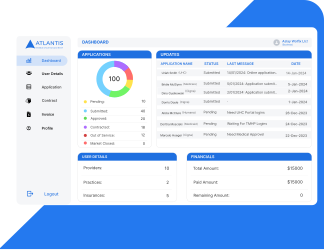
Real-Time Client Report Portal
Access real-time insights into your billing performance with our secure Client Report Portal.Track claims, payments, denials, and KPIs anytime—transparency at your fingertips.
Contact Us