The 7 Places Revenue Escapes Before Payment Arrives (And Most Practices Never Notice)

Most providers assume revenue is lost only when a claim is denied. The reality is far more concerning.
Long before a payment is posted, money can quietly disappear through overlooked administrative mistakes, documentation gaps, registration errors, and inefficient workflows. These issues often remain invisible because they happen across different stages of the Revenue Cycle Management process.
The result?
Delayed reimbursements. Growing accounts receivable. Increased staff workload. Less predictable cash flow.
The good news is that most of these losses are preventable once you know where they occur.
Let's look at the seven points where practice revenue commonly slips away before payment ever arrives.
1. Patient Registration: Where Revenue Loss Often Begins
The first opportunity to protect revenue happens before the patient even sees the provider.
Simple registration mistakes can create problems that continue throughout the entire medical billing process. An incorrect insurance ID, outdated address, spelling error, or inaccurate date of birth may appear harmless, but these small details often lead to rejected claims later.
Many practices focus heavily on billing while overlooking the accuracy of front-desk data collection.
A strong Revenue Cycle Management strategy begins with complete and accurate patient information.
Common registration issues include:
Incorrect demographic information
Missing subscriber details
Expired insurance plans
Data entry errors
Incomplete patient records
Every clean claim starts with accurate registration.
2. Insurance Verification That Happens Too Late
Insurance eligibility changes more frequently than many providers realize.
Patients change employers, insurance plans expire, deductibles reset, and coverage limitations evolve throughout the year. If eligibility isn't verified before the appointment, practices often discover problems only after the claim has already been submitted.
This creates unnecessary payment delays and increases administrative work for staff.
Instead of correcting issues afterward, proactive insurance verification allows practices to identify coverage concerns before services are delivered.
Preventing one denied claim is significantly less expensive than correcting one.
3. Documentation Gaps That Slow Reimbursement
Clinical documentation supports every claim submitted.
When documentation lacks specificity, contains missing signatures, or fails to support medical necessity, coding accuracy becomes more difficult. Even small inconsistencies can interrupt the reimbursement process.
Providers don't intentionally create documentation issues.
Most simply don't realize how closely documentation quality influences financial outcomes.
Clear, complete records improve coding accuracy while reducing unnecessary back-and-forth between providers and billing teams.
4. Coding Errors That Quietly Reduce Revenue
Accurate coding is more than assigning diagnosis and procedure codes.
Even experienced practices can encounter missing modifiers, outdated code sets, incorrect code combinations, or documentation that doesn't fully support the services provided. These issues may not always result in immediate claim denials, but they can trigger payment reductions, payer reviews, or repeated requests for additional information.
Over time, these small coding inconsistencies create significant revenue leakage that often goes unnoticed.
5. Claims That Aren't Truly "Clean"
Submitting a claim doesn't guarantee reimbursement.
A claim may pass internal review but still contain missing information, formatting errors, or payer-specific requirements that prevent successful processing.
Every rejected claim means more administrative work, delayed cash flow, and additional follow-up.
Practices that consistently produce clean claims spend less time correcting mistakes and more time focusing on patient care.
Simple improvements that increase first-pass acceptance include:
Reviewing documentation before submission
Confirming coding accuracy
Validating payer requirements
Checking claim completeness
Monitoring submission quality regularly
The cleaner the claim, the faster the payment.
6. Delayed Denial Follow-Up Costs More Than You Think
A denied claim is not always a lost claim.
However, waiting too long to respond often turns a recoverable payment into permanent lost revenue.
Every payer has filing deadlines, appeal windows, and documentation requirements. When follow-up is delayed, practices lose valuable opportunities to recover reimbursement.
Effective denial management isn't about reacting to individual denials.
It's about identifying recurring patterns, correcting root causes, and preventing the same issues from happening again.
Practices that monitor denial trends are better positioned to improve financial performance over time.
7. Aging Accounts Receivable Hide Revenue Problems
Outstanding balances don't simply represent unpaid claims.
They often reveal larger workflow issues that require attention.
Slow follow-up, inconsistent payment posting, unresolved denials, and delayed payer responses all contribute to growing receivables.
Without proactive accounts receivable management, payments remain outstanding longer, reducing cash flow and increasing collection challenges.
Regular monitoring helps practices answer important questions:
Which claims have remained unpaid the longest?
Which payers consistently delay reimbursement?
Where are recurring billing bottlenecks occurring?
Which balances require immediate follow-up?
When receivables continue to age, revenue becomes increasingly difficult to recover.
How to Close the Revenue Gaps
The strongest financial performance doesn't come from fixing isolated billing problems.
It comes from strengthening every stage of medical billing workflows, from patient registration through final payment.
Practices that regularly review workflows, monitor financial performance, improve documentation, and address operational inefficiencies are better equipped to reduce revenue leakage and maintain consistent cash flow.
Small improvements across multiple stages often deliver greater long-term results than focusing on a single billing issue.
Conclusion
Revenue rarely disappears all at once.
More often, it slips away through small, preventable issues that occur throughout the healthcare revenue cycle. A registration mistake, incomplete documentation, coding inconsistency, or delayed follow-up may seem minor on its own, but together they can significantly affect your practice's financial health.
Identifying these hidden gaps is the first step toward building a stronger, more efficient reimbursement process.
Protect Every Dollar with Atlantis RCM
At Atlantis RCM, we help healthcare practices strengthen every stage of their revenue cycle from accurate patient registration and eligibility verification to coding, claims processing, denial resolution, and accounts receivable follow-up.
Our experienced team focuses on reducing revenue leakage, improving reimbursement accuracy, and helping providers build a more predictable financial future.
Partner with Atlantis RCM to transform your revenue cycle into a stronger, more reliable source of growth.
FAQs
1. How can I identify where my practice is losing revenue?
Many revenue losses aren't immediately visible. Reviewing key performance indicators such as claim denial rates, first-pass claim acceptance, accounts receivable aging, and reimbursement trends can help identify where revenue is leaking within your revenue cycle.
2. What is the biggest cause of revenue leakage in medical practices?
There isn't a single cause. Revenue leakage often results from a combination of patient registration errors, incomplete insurance verification, coding inaccuracies, documentation gaps, delayed claim submission, and insufficient denial follow-up.
3. How often should we review our Revenue Cycle Management performance?
Practices should monitor Revenue Cycle Management metrics at least monthly. Regular performance reviews help identify recurring issues early, improve cash flow, and prevent small problems from becoming significant financial losses.
4. Can outsourcing medical billing help reduce revenue leakage?
Yes. An experienced medical billing partner can improve claim accuracy, reduce denials, strengthen follow-up processes, and provide ongoing performance insights that help practices recover more revenue while reducing administrative burden.
5. Which revenue cycle metrics should my practice track most closely?
Providers should monitor first-pass claim acceptance rate, denial rate, days in accounts receivable (A/R), clean claim rate, collection rate, reimbursement turnaround time, and outstanding claim balances to maintain a healthy financial performance.
Our Services


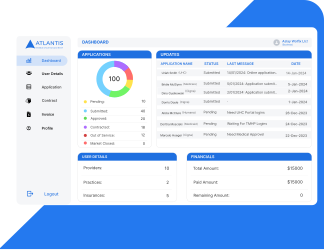
Real-Time Client Report Portal
Access real-time insights into your billing performance with our secure Client Report Portal.Track claims, payments, denials, and KPIs anytime—transparency at your fingertips.
Contact Us