Emerging AI Technologies for Small Medical Practices

Running a small medical practice today is like balancing on a tightrope. You need to deliver high-quality patient care while managing paperwork, staff, and limited budgets. Fortunately, AI tools for small medical practices are leveling the playing field, giving smaller clinics access to innovations once reserved for big hospital systems.
From AI clinical decision support to workflow automation, medical scribes, diagnostic tools, and patient chatbots, these solutions are designed to save time, reduce stress, and let you focus on what matters most, your patients.
The AI Toolkit: Small Medical Practice Technologies
AI isn’t just a buzzword anymore, it’s the toolkit that small practices need to thrive in today’s healthcare environment. Below are the core tools shaping the future of care.

AI-Driven Clinical Decision Support: Your Sidekick in Patient Care
Imagine having a digital assistant that scans patient data, spots patterns, and suggests evidence-based treatment options. That’s AI clinical decision support in action.
Whether it’s flagging drug interactions or predicting cardiovascular risks, CDS tools serve as an extra set of eyes, improving both safety and precision. According to the AMA, 72% of physicians say AI tools for medical practices are most helpful for improving diagnosis.
Picture this: a CDS tool detects early signs of a serious condition during a routine visit, giving providers the opportunity to intervene and change the outcome. That’s not just technology, that’s the future of medicine.
Smarter insights mean safer, faster diagnoses that patients everywhere can trust.
AI for Workflow Automation: Cutting Through the Noise
Administrative tasks from medical billing to scheduling to data entry often consume as much time as patient care. AI workflow automation for clinics helps reduce that load by taking care of repetitive tasks.
By optimizing appointment scheduling, cutting down on no-shows, and streamlining billing processes, workflow automation allows providers to spend more time focusing on patient care. Physicians consistently rank workflow efficiency as one of AI’s greatest strengths.
Automation clears the clutter, giving practices in every region more time for care.
Voice-Activated AI Scribes: No More Documentation Fatigue
Documentation is one of the biggest pain points in modern medicine. AI medical scribes are transforming that experience by capturing conversations during patient visits and automatically generating structured notes in real time.
By automating up to 75% of documentation tasks, AI scribes save providers hours each day, reduce after-hours charting, and improve accuracy. When deployed at scale, these tools have been shown to improve provider satisfaction, reduce burnout, and strengthen patient interactions.
Real-time notes help doctors everywhere focus on patients, not paperwork.
AI for Diagnostic Support: Accurate Every Time

Difficult cases can require multiple tests and second opinions. With AI diagnostic tools, practices can leverage machine learning to analyze medical images, lab results, and patient data for faster, more accurate diagnoses.
For example, AI platforms like Google DeepMind have demonstrated the ability to predict acute kidney injury up to 48 hours before it occurs giving providers valuable time to intervene. In fact, 61% of physicians believe emerging AI healthcare technologies have the potential to improve clinical outcomes.
Early predictions and precise analysis improve outcomes no matter where you practice.
AI Patient Engagement Chatbots: Always Available
Patients today expect fast, reliable communication. AI patient engagement chatbots provide 24/7 support, answering common questions, sending medication reminders, scheduling appointments, and even sharing trusted health resources.
For small practices, chatbots act like an extra team member reducing staff workload, improving patient accessibility outside office hours, and creating more consistent communication. Over time, this leads to greater patient satisfaction and stronger trust in care.
Transparency is essential. Surveys show that 80% of physicians believe healthcare AI must be clear about how tools are developed and deployed. When implemented correctly, AI chatbots have demonstrated high patient satisfaction and reliability.
24/7 support creates stronger patient relationships and a better experience in any community.
AI in Small Practices: Opportunities for Growth
Adopting AI may feel like a big leap, but it comes with significant benefits for smaller practices:
Seamless Integration: AI solutions can fit directly into existing workflows without disruption.
Accessible for Everyone: User-friendly designs and training make onboarding simple.
Built for Privacy: With most physicians prioritizing data security, modern AI tools are designed for compliance and safety.
Start Small, Grow Big: Begin with one tool such as documentation automation and expand as results build.
Strengthening Trust: Position AI as a supportive partner, not a replacement for human care.
AI is not about replacing providers. It’s about making their work easier, smarter, and more impactful.
Simple, scalable tools help practices grow steadily while meeting local patient needs.
Building Trust Through Transparency
For AI adoption to succeed, patients and providers alike must trust the technology. Transparency in design, clear explanations of how systems work, and reassurance that AI supports rather than replaces physicians are essential to building confidence.
Modern AI solutions also prioritize patient data security, ensuring compliance with healthcare regulations while maintaining trust.
Clear, reliable AI builds confidence and keeps patient care at the heart of every practice.
Make AI Work for You
To begin using AI effectively in your practice:
Start with one manageable problem, like documentation or scheduling.
Ask detailed questions about security and functionality before adopting tools.
Invest in training to make sure your team is comfortable with the technology.
Step-by-step adoption ensures every practice can benefit, from small clinics to regional networks.
The Future Is Now
AI tools for small medical practices are already proving their value. From improving diagnostics to automating workflows and enhancing patient engagement, these technologies are helping small clinics work smarter and deliver better care.
The future of healthcare isn’t coming, it’s here. The question is how you’ll use it to strengthen your practice today.
Want to dive deeper? Explore our blog on How AI is Revolutionizing Revenue Cycle Management to see how smarter technology can further optimize your practice’s growth.
Our Services


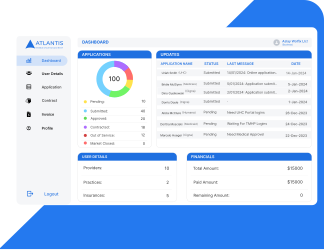
Real-Time Client Report Portal
Access real-time insights into your billing performance with our secure Client Report Portal.Track claims, payments, denials, and KPIs anytime—transparency at your fingertips.
Contact Us