Blue Cross Blue Shield Therapy Reimbursement 2025

Mental health care is not a luxury, it's a necessity. Yet, for providers and patients, one of the most pressing questions is: How much will insurance actually pay? With Blue Cross Blue Shield therapy reimbursement 2025, understanding coverage has never been more important.
Today, more than 60 million Americans rely on BCBS for their mental health needs. Rising demand, shifting policies, and the expansion of telehealth mean both patients and providers need clarity on reimbursement. The good news? With the right knowledge, you can avoid financial stress, maximize payments, and focus on what truly matters: healing and care.
Understanding Therapy Reimbursement Basics
Reimbursement is simply the process of getting paid for therapy sessions after submitting claims to Blue Cross Blue Shield. Here’s how it works:
Step 1: You deliver therapy and bill with the correct CPT code.
Step 2: BCBS reviews your claim against the patient’s plan.
Step 3: Payment is issued based on the “allowed amount,†minus copays, coinsurance, or deductibles.
Being in-network usually means faster payments and higher rates. Out-of-network often leads to lower reimbursement and more paperwork. This is why both patients and providers must confirm network status before scheduling therapy.
BCBS Mental Health Coverage
Most Blue Cross Blue Shield plans cover a wide range of behavioral health services, including:
Individual therapy
Family and couples therapy
Group counseling
Psychiatric evaluations
Crisis intervention
Online and telehealth therapy
Coverage levels differ by state and plan type, but BCBS generally provides reliable support for both traditional and modern therapy methods. This breadth of BCBS mental health coverage makes it one of the most accessible insurers for patients seeking care.
Therapy CPT Code Reimbursement
The amount BCBS reimburses depends heavily on the CPT code used. Below is a simplified table of the most common therapy services and their estimated rate

Understanding therapy CPT code reimbursement helps providers set realistic expectations and track payments.
In-Network vs Out-of-Network Therapy Rates
The difference between in-network vs out-of-network therapy rates is significant for both providers and patients.
For providers, joining the BCBS network reduces denials and accelerates payments. For patients, it keeps therapy affordable and consistent.
BCBS Telehealth Reimbursement
Since the pandemic, telehealth has become a cornerstone of mental health care. Fortunately, BCBS telehealth reimbursement often matches in-person rates due to state parity laws.
Providers must use the same CPT codes as office visits but apply telehealth modifiers (such as GT). Patients benefit by accessing therapy from home without sacrificing insurance coverage. This has expanded access nationwide, especially in rural or underserved areas.
Factors That Influence Reimbursement
Provider Credentials
Reimbursement rates often vary based on the provider’s qualifications. Psychiatrists and licensed psychologists usually earn higher rates than counselors or social workers because their advanced training and licensure are valued more by insurers.
Session Type and Length
Longer or crisis-based sessions are reimbursed at higher levels than standard 30-minute visits. For example, a 60-minute psychotherapy session (CPT 90837) will generally be paid more than a shorter 30-minute session.
Geographic Location
Urban centers with a higher cost of living usually offer higher reimbursement rates, while rural providers often receive lower payments. Location-based adjustments help insurers balance provider availability across regions.
Plan Type
Patients with PPO plans typically enjoy broader access and providers often see better reimbursement than with HMO plans. High Deductible Health Plans (HDHPs) may delay reimbursement until deductibles are met, creating additional financial strain.
In-Network vs Out-of-Network Status
Being in-network with BCBS usually means quicker payments and higher rates. Out-of-network providers often face reduced reimbursement and higher patient cost-sharing, which can discourage patients from continuing care.
Telehealth Coverage Policies
Since telehealth parity laws vary by state, reimbursement for virtual sessions may differ from in-person visits. Some BCBS affiliates pay equally for both, while others reimburse less for online therapy.
Documentation and Coding Accuracy
Incorrect CPT codes, missing modifiers, or incomplete documentation are leading causes of claim denials. Accurate paperwork ensures faster, smoother reimbursement with fewer delays.
Contract Negotiations and Updates
BCBS contracts are not fixed forever. Providers who actively review and negotiate their contracts often secure better rates, while those who overlook updates may miss out on higher payments.
Understanding Different BCBS Plans and Mental Health Coverage
Before starting therapy, it’s essential to know that not all Blue Cross Blue Shield (BCBS) plans provide the same mental health benefits. Coverage for individual counseling, family therapy, group sessions, or psychiatric care depends on the specific plan type as well as state regulations.
HMO (Health Maintenance Organization)
HMO plans limit coverage to in-network providers and often require a referral from a primary care physician before starting therapy. They typically have lower copays but offer less flexibility.
PPO (Preferred Provider Organization)
PPO plans provide the most flexibility, covering both in-network and out-of-network therapy. Patients pay less when using in-network providers, and referrals are not required.
EPO (Exclusive Provider Organization)
EPO plans cover only in-network therapy services, but unlike HMOs, they don’t usually require a referral. This makes access easier but limits choice of providers.
POS (Point of Service)
POS plans are a hybrid. They may cover out-of-network therapy at a higher cost and usually require a PCP referral to access mental health services.
Does BCBS Cover Online Therapy?
Yes. Many BCBS plans now cover online therapy, especially after the expansion of telehealth services in recent years. Patients can access care for anxiety, depression, trauma, or other mental health needs through video sessions or secure messaging platforms. However, reimbursement levels for telehealth may vary by plan and state.
Providers should always verify benefits before scheduling, ensuring that telehealth sessions meet BCBS guidelines and are billed with the appropriate CPT codes and modifiers.
Blue Cross Blue Shield Mental Health Benefits
Despite the complexities, BCBS offers some of the strongest advantages in the market. Patients benefit from affordable access, while providers gain financial stability.
Key Blue Cross Blue Shield mental health benefits include:
Broad nationwide provider network.
Affordable copays, averaging $15–$40.
Comprehensive coverage across individual, family, and group therapy.
Strong privacy protections under HIPAA compliance.
Reliable telehealth reimbursement.
Challenges Therapists Face with BCBS Reimbursement
Even with strong coverage, therapists often struggle with BCBS reimbursement. Some of the most common challenges include:
Low Reimbursement Rates Compared to Medical Services
Mental health providers frequently receive lower payments than physical health providers for equally time-intensive sessions, despite rising demand for behavioral care.
Delayed Payments
Complex claims processes, missing information, or verification issues can slow payments, creating cash flow challenges for practices.
Frequent Claim Denials
Authorization problems, incorrect coding, or network mismatches often trigger denials. These require resubmission and appeals, adding to provider workload.
Lack of Transparency in Fee Schedules
BCBS affiliates sometimes change fee schedules or policies without clear communication, making it difficult for providers to predict revenue.
Administrative Burden
Therapists spend significant time on paperwork, prior authorizations, and appeals instead of patient care. This adds stress and reduces efficiency.
Conclusion
Mental health care must be accessible, and insurance plays a key role. With the right understanding of Blue Cross Blue Shield therapy reimbursement 2025, providers can secure fair payments while patients gain consistent access to therapy.
At Atlantis RCM Medical Billing Company, we help practices reduce denials, negotiate better rates, and get paid faster so providers can focus on care, not paperwork. Together, we can make reimbursement seamless and mental health care truly accessible.
FAQs
How much does BCBS reimburse for therapy?
Reimbursement varies but averages $80–$160 for standard sessions.Does BCBS cover online therapy?
Yes. Most plans cover virtual therapy at rates similar to in-person sessions.What is the average copay?
The average is $15–$40, though high-deductible plans may require full payment until the deductible is met.How many sessions are included?
Most plans cover unlimited sessions deemed medically necessary, but prior authorization may be required.What if a claim is denied?
Check the denial reason, correct errors, and resubmit. Partnering with billing specialists like Atlantis RCM reduces denials and ensures smoother payment.Our Services


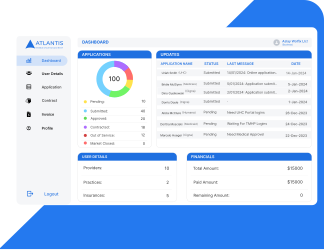
Real-Time Client Report Portal
Access real-time insights into your billing performance with our secure Client Report Portal.Track claims, payments, denials, and KPIs anytime—transparency at your fingertips.
Contact Us