Common Billing Problems in Internal Medicine

Every denied claim has a cause and in internal medicine, even a small billing mistake can lead to delayed payments, lost revenue, and hours of unnecessary rework. As patient volumes grow and payer requirements become more complex, maintaining a clean billing process is more challenging than ever.
The good news?
Most billing problems are preventable. By recognizing the most common issues early, internal medicine practices can reduce claim denials, improve cash flow, and spend more time delivering quality patient care instead of chasing reimbursements.
The good news is that most billing issues are not caused by complicated payer policies they stem from small workflow gaps that can be corrected with better processes, stronger documentation, and proactive revenue cycle management.
By understanding where mistakes commonly occur, internal medicine practices can improve claim acceptance rates, reduce accounts receivable, strengthen cash flow, and spend less time correcting rejected claims.
Inaccurate Patient Information Creates Claim Delays
"It was just a small mistake... So why was the claim rejected?"
Even a minor error in patient demographics, insurance details, or policy numbers can cause claims to be rejected before they ever reach the payer. These avoidable mistakes delay reimbursement and create unnecessary work for your billing team.
Verifying patient information during scheduling and confirming it again at check-in helps eliminate front-end errors. Strong medical billing workflows ensure claims are submitted with accurate information the first time, reducing preventable payment delays.
Incorrect Medical Coding Leads to Payment Issues
"The care was provided—but did the coding tell the whole story?"
Internal medicine providers often treat multiple chronic conditions during a single visit, making coding more complex. Missing, outdated, or inaccurate codes frequently result in claim denials, reduced reimbursement, or requests for additional documentation.
Accurate medical coding supported by detailed clinical documentation reflects the true complexity of the services provided. Regular coding updates and ongoing staff education improve claim accuracy while reducing compliance risks.
Documentation Does Not Support the Services Billed
"If the documentation isn't complete, the payer may not approve the claim."
Insurance companies expect medical records to justify every billed service. When documentation does not support the reported procedure or evaluation level, reimbursement may be delayed, reduced, or denied.
Clear physician notes, complete encounter documentation, and consistent charting practices strengthen claim quality. Proper documentation also protects providers during audits and payer reviews.
Eligibility Verification Is Missed Before the Visit
"Has the patient's insurance changed since their last appointment?"
Submitting claims without confirming active insurance coverage often leads to rejected claims and unexpected patient balances. Coverage changes can happen at any time—even for returning patients.
Real-time eligibility verification before appointments reduces billing surprises and improves collections. This simple step helps practices avoid unnecessary claim corrections while supporting smoother revenue cycle management.
Prior Authorization Requirements Are Overlooked
"The treatment was necessary—but was it authorized?"
Many diagnostic tests, imaging services, and specialty medications require prior authorization before services are performed. Missing these requirements can result in claims being denied regardless of medical necessity.
Tracking authorization requirements before treatment protects reimbursement and reduces avoidable administrative work. Organized authorization workflows improve financial performance while creating a better patient experience.
Timely Filing Deadlines Are Missed
"A perfectly documented claim can still go unpaid if it's filed too late."
Every insurance payer has strict filing deadlines. Delayed claim submission can permanently eliminate reimbursement opportunities, even when services are appropriately documented and coded.
Submitting claims promptly and monitoring pending encounters helps practices avoid costly filing issues. Regular follow-up also improves cash flow and reduces aging accounts through effective AR management.
Denied Claims Are Not Addressed Quickly
"A denied claim today can become lost revenue tomorrow."
Many practices focus on submitting claims but spend less time analyzing why denials occur. When denial trends go unnoticed, the same billing mistakes continue to affect reimbursement.
A structured denial management process identifies recurring issues, improves billing performance, and prevents future payment delays. Periodic medical billing audits also uncover workflow gaps before they become costly revenue problems.
Lack of Billing Follow-Up Slows Collections
"Submitting the claim is only the beginning of the payment process."
Without consistent follow-up, unpaid claims can remain outstanding for weeks or even months. Delayed payer responses and unresolved claim issues often increase accounts receivable and slow cash flow.
Regular claim status reviews, proactive payer communication, and patient balance monitoring improve collection rates. Partnering with an experienced medical billing service can further reduce administrative burden while helping practices recover outstanding revenue more efficiently.
Best Practices for Internal Medicine Medical Billing
Reducing billing errors requires more than correcting denied claims; it starts with building efficient workflows across every stage of the revenue cycle. By adopting proven billing practices, internal medicine providers can improve claim accuracy, accelerate reimbursements, and reduce administrative burden.
Verify patient demographics and insurance eligibility before every visit.
Maintain complete, timely, and accurate clinical documentation.
Use updated CPT, ICD-10-CM, and HCPCS codes for every claim.
Track prior authorizations and payer-specific requirements.
Submit claims promptly to avoid timely filing denials.
Monitor denial trends and address recurring issues.
Perform regular medical billing audits to identify workflow gaps.
Strengthen AR management with consistent claim follow-up.
Provide ongoing coding and billing training for staff.
Consider partnering with an experienced medical billing company to optimize revenue cycle management.
Conclusion
Billing challenges in internal medicine are often caused by small process gaps that gradually affect reimbursement, compliance, and operational efficiency. From coding accuracy to documentation quality and timely follow-up, every stage of the billing cycle plays a role in financial success.
By identifying these common billing problems early and improving internal workflows, practices can reduce claim denials, accelerate payments, and maintain a healthier revenue stream.
Partner with Atlantis RCM for Smarter Internal Medicine Billing
Managing internal medicine billing requires accuracy, consistency, and continuous follow-up. Atlantis RCM helps practices reduce billing errors, improve claim acceptance rates, optimize collections, and streamline every stage of the reimbursement process.
Whether you need complete billing support or assistance improving your current workflow, our experienced team delivers reliable solutions that help your practice maximize revenue while allowing providers to focus on exceptional patient care.
Contact Atlantis RCM today to simplify your billing process and improve your financial performance.
Frequently Asked Questions
What is the most common billing problem in internal medicine?
The most common issue is inaccurate coding and incomplete documentation, which frequently lead to claim denials or reduced reimbursement.
Why are internal medicine claims denied?
Claims are commonly denied because of coding errors, missing documentation, eligibility issues, lack of prior authorization, duplicate claims, or missed filing deadlines.
How can internal medicine practices reduce claim denials?
Practices can reduce denials by verifying insurance eligibility, improving documentation, using accurate coding, monitoring denials regularly, and submitting claims promptly.
Why is documentation important in internal medicine billing?
Documentation supports medical necessity and validates every billed service. Complete records help prevent denials and ensure compliance with payer requirements.
Should an internal medicine practice outsource medical billing?
Many providers outsource billing to improve claim accuracy, reduce administrative workload, increase collections, and maintain a more efficient billing process.
How often should an internal medicine practice perform a billing review?
Industry discussions on Reddit and Quora commonly recommend reviewing billing performance monthly or quarterly. Regular audits help identify recurring errors, improve workflow efficiency, and prevent long-term revenue loss.
Our Services


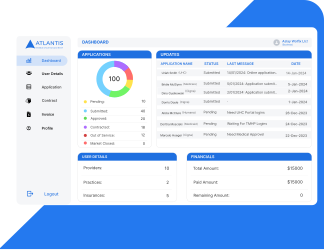
Real-Time Client Report Portal
Access real-time insights into your billing performance with our secure Client Report Portal.Track claims, payments, denials, and KPIs anytime—transparency at your fingertips.
Contact Us