CPT 99445 in Medical Billing: Everything Healthcare Providers Need to Know

Remote patient monitoring is changing healthcare delivery. With the 2026 CPT updates, CPT 99445 in medical billing now allows healthcare providers to bill for patients who transmit physiological data for 2-15 days in a month.
This update closes a gap in RPM reimbursement, allowing providers to deliver patient-centered care while maintaining stable revenue cycle management practice .
What Is CPT 99445?
CPT 99445 is a new code introduced in 2026 for remote patient monitoring. Unlike CPT 99454, which requires patients to send data for at least 16 days in a 30-day period, CPT 99445 applies when patients submit data for 2-15 days.
This code is ideal for patients with stable chronic conditions or therapies that do not require daily monitoring. Patients can participate in RPM programs without the pressure of sending daily readings.
Who Can Bill CPT 99445 in Medical Billing?
CPT 99445 can be billed by physicians, advanced practice registered nurses, physician assistants, and clinical staff under general supervision. Most RPM tasks can be delegated to staff, which reduces the time physicians need to spend on monitoring.
Billing Frequency for CPT 99445
CPT 99445 may be billed once every 30 days per patient. It is important for providers to determine whether to bill CPT 99445 or CPT 99454 based on patient data submissions.
Reimbursement for CPT 99445
CMS has set the reimbursement for CPT 99445 at approximately $47, the same as CPT 99454. This prevents financial loss when patients send less than 16 days of data and supports stable revenue for RPM programs.
Why CPT 99445 Is Important
CPT 99445 addresses a critical flaw in the previous RPM reimbursement policy. Providers were not reimbursed if patients submitted less than 16 days of data, leaving many clinically relevant patients unmonitored.
Expands Patient Eligibility
CPT 99445 allows healthcare providers to include patients who cannot monitor daily. This means more patients can benefit from RPM, including those with stable conditions or lifestyle limitations that prevent daily data submission.
Ensures Consistent Payment
With CPT 99445, providers can bill at the same rate as CPT 99454, even when patients send fewer than 16 days of data. This stabilizes revenue and avoids sudden financial losses while supporting patient-centered care.
Promotes Long-Term RPM Sustainability
Including patients who monitor less frequently helps maintain the financial viability of RPM programs. Providers can sustain revenue flow while offering flexible care that matches patient needs.
Enhances Patient Engagement
Less frequent monitoring reduces patient burnout. CPT 99445 allows weekly or bi-weekly monitoring, making RPM programs more manageable and improving patient adherence.
Examples of CPT 99445 in Practice
Monitoring Blood Pressure
A patient with controlled hypertension may only need to check blood pressure 2-3 times per week. CPT 99445 allows providers to bill for these readings, even if the patient does not submit daily data.
Supporting Weight Loss Programs
Patients managing weight may prefer weekly weigh-ins instead of daily tracking. CPT 99445 allows providers to monitor progress, offer guidance, and bill appropriately for the service.
Case Study Example
A case study from Prevounce Health showed a 13% increase in annual revenue for a 522-patient RPM program after implementing CPT 99445.
This demonstrates how the code improves both financial outcomes and patient care.
Best Practices for Billing CPT 99445
Track Patient Activity
Providers should monitor how many days patients submit data to ensure proper billing. CPT 99445 applies for 2-15 days, while CPT 99454 applies for 16 or more days of data submission.
Document Everything Clearly
Healthcare providers must keep accurate records of data submission, the FDA-cleared device used, and any staff or provider communication. Proper documentation ensures compliance and protects against audits.
Check RPM Equipment Regularly
RPM devices should be checked daily to ensure they are transmitting data correctly. Device issues can reduce the number of monitoring days, affecting eligibility for CPT 99445 billing.
Conclusion
CPT 99445 in medical billing is a key update for healthcare providers using remote patient monitoring. It expands patient eligibility, stabilizes payments, and supports sustainable RPM programs while improving patient engagement.
Integrate CPT 99445 into your medical coding and revenue cycle management to deliver patient-centered care efficiently.
Boost your RPM revenue with Atlantis RCM today.
Frequently Asked Questions (FAQs)
What exactly is CPT 99445?
CPT 99445 is a new remote patient monitoring (RPM) billing code used when a patient’s device sends physiological data for 2–15 days in a 30‑day period. Before 2026, providers couldn’t bill for monitoring unless data was sent for at least 16 days.
How is CPT 99445 different from CPT 99454?
Both codes are for the device supply and data transmission in RPM. The difference is based on the number of days the patient sends data. Use 99445 for 2‑15 days and use 99454 for 16‑30 days. You can only bill one of them per 30‑day period per patient.
Do I need an FDA‑cleared device for CPT 99445 to count?
Yes. Only data that is automatically recorded and transmitted through an FDA‑cleared medical device counts toward CPT 99445 billing. Manual entries or consumer wearables without clearance generally do not count.
Can CPT 99445 and CPT 99454 be billed together?
No. For the same 30‑day monitoring period with one patient, you must choose either CPT 99445 or CPT 99454 based on the total days of data transmitted.
How much does Medicare pay for CPT 99445?
The estimated Medicare reimbursement for CPT 99445 is about the same as CPT 99454, roughly $47 nationally in 2026, though actual amounts can vary by location and payer.
When should I use CPT 99445 instead of other RPM codes?
Use CPT 99445 when your patient’s RPM device sends data on 2–15 days in a month. If you have shorter or intermittent monitoring (like post‑discharge or weekly check‑ins), CPT 99445 lets you bill for real patient engagement that was previously unbillable.
Our Services


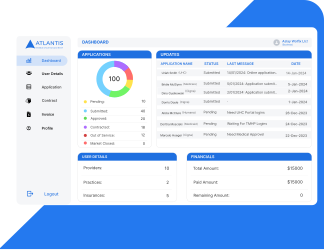
Real-Time Client Report Portal
Access real-time insights into your billing performance with our secure Client Report Portal.Track claims, payments, denials, and KPIs anytime—transparency at your fingertips.
Contact Us