Denial Management in Medical Billing – A Complete Guide by Atlantis RCM

Denial management in medical billing is the backbone of a strong revenue cycle. For healthcare providers, every denied claim represents lost revenue, wasted staff hours, and potential patient dissatisfaction. That’s why mastering this process is no longer optional, it’s a necessity. Atlantis RCM helps providers streamline claim approvals, reduce denials, and secure consistent payments.
Think of it as the difference between chasing payments and getting paid on time.
Why Denial Management in Medical Billing Matters
In today’s healthcare environment, claim denials in healthcare are on the rise. Without effective denial management, practices risk delayed payments, uncompensated services, and administrative bottlenecks. Denial management not only secures reimbursements but also strengthens operational efficiency and patient trust.
Key benefits include:
Reduced revenue blockages
Faster payment cycles
Lower rework and administrative costs
Improved patient satisfaction
Boosted cash flow
Strong denial management today means fewer headaches tomorrow.
Denial Management Process in Medical Billing
A structured denial management practice ensures no claim slips through the cracks. Atlantis RCM follows a step-by-step approach to minimize revenue loss and enhance billing efficiency.

1. Understanding and Identifying Denials
The first step is to review overdue claims that have gone beyond the expected payment timeline. By using payer portals, practices can track claim statuses and catch issues early. Analyzing Explanation of Benefits (EOBs) and electronic remittance advice (ERA) provides clear insights into the denial reasons, while direct communication with payers ensures clarity and faster resolutions.
2. Analyzing and Categorizing Denials
Once denials are identified, they need to be categorized into specific groups such as coding errors, duplicate claims, or eligibility issues. This organization helps spot recurring problems that may indicate systemic flaws in the billing process. By understanding these patterns, providers can take corrective actions to fix processes at the source and prevent repeated denials in the future.
3. Correcting and Resubmitting Claims
After identifying and analyzing the issues, the next step is correcting the denied claims. This may include updating patient details, fixing inaccurate codes, or providing missing documentation. Once corrections are made, claims should be resubmitted promptly according to payer guidelines to secure reimbursements quickly and maintain smooth cash flow.
Fix the root, not just the symptom, and watch your approvals climb.
Common Types of Claim Denials Impacting Healthcare
Providers face multiple categories of denials, but some errors appear more frequently and have a direct impact on revenue cycle performance. Addressing these common issues is the first step to ensuring smoother claim approvals and stronger financial outcomes.
Incorrect or Incomplete Patient Details
Even a small typo in patient demographics, such as date of birth or insurance ID, can cause costly rejections. Verifying patient information upfront reduces delays and protects revenue.
Billing Code Errors
Using the wrong medical codes or mismatched procedure codes often leads to denials. Accurate coding not only improves claim acceptance but also ensures compliance with payer guidelines.
In many states like California, Texas, and Florida, coding errors remain one of the top reasons for claim denials, making compliance and training even more important for providers.
Missed Submission Deadlines
Timing is everything in medical billing. Submitting claims after a payer’s deadline almost always results in denial, making timely claim management essential for maintaining cash flow.
Repeated Claims Without Modifiers
Submitting claims for the same service more than once without the correct modifiers creates unnecessary rejections. Ensuring proper coding and documentation prevents duplication errors.
Lack of Pre-Authorization
Failing to secure pre-authorization before certain treatments or procedures is a major cause of denials. Confirming approvals in advance saves both providers and patients from unexpected financial burdens.
At Atlantis RCM, we help healthcare providers reduce denials and accelerate payments, ensuring accurate billing from New York to across the nation.
5 Effective Strategies to Prevent Denials in Medical Billing
Atlantis RCM emphasizes that the best way to manage denials is to prevent them before they happen. By applying the right strategies, providers can minimize errors, save valuable time, and maintain a steady revenue flow.

1. Upgrade Claims Technology
Automating claim submissions reduces manual entry mistakes and accelerates the approval process. Advanced billing systems help ensure accuracy, making it easier to spot errors before payers do.
2. Provide Regular Staff Training
Well-trained staff play a critical role in accurate claim submissions. Ongoing training in coding standards and payer requirements keeps teams updated and lowers the chances of costly denials.
3. Conduct Performance Audits
Routine audits allow providers to catch recurring issues in claims before they result in rejections. This proactive review strengthens compliance and ensures billing practices remain consistent with payer guidelines.
4. Foster Cross-Department Collaboration
Effective denial prevention requires billing, coding, and clinical staff to work in sync. A collaborative approach eliminates silos and ensures every department contributes to cleaner, more accurate claims.
5. Stay Updated with Payer Policies and Trends
Healthcare payers frequently update their rules, deadlines, and documentation standards. Staying current with industry trends and payer requirements ensures compliance and keeps claim approval rates high.
Prevention is always cheaper than correcting an investment in strategy today saves thousands in denied revenue tomorrow.
How Denial Management Software Transforms RCM
Denial management software is a game-changer for modern medical billing. It enables:
Real-time denial tracking – faster responses mean faster payments.
Data-driven insights – analytics uncover recurring denial patterns.
Custom workflows – tailor processes to practice-specific needs.
EHR integration – ensures accurate and consistent claim submissions.
Software doesn’t replace staff, it empowers them.
Final Thoughts
Denial management in medical billing is more than just fixing rejections, it’s about building a resilient financial system. With a mix of advanced technology, trained teams, and strategic outsourcing, providers can turn denials into opportunities for process improvement.
Atlantis RCM empowers healthcare organizations to improve revenue cycle management, claim denial resolution, and medical billing services with efficiency and accuracy. Whether you choose in-house optimization or outsourced support, proactive denial management ensures stronger financial health and better patient care.
Atlantis RCM: Turning denials into dollars, one claim at a time.
Frequently Asked Questions
1. What is denial management in medical billing?
Denial management in medical billing is the process of identifying, analyzing, and resolving insurance claim denials. It ensures providers receive proper reimbursement for services while preventing future revenue loss.
2. Why are claim denials increasing in healthcare?
Claim denials are rising due to stricter payer requirements, inaccurate coding, missing patient details, and delays in claim submission. Proactive denial management helps reduce these risks.
3. What are the most common reasons for medical billing denials?
The most common reasons include incorrect patient information, coding errors, missed filing deadlines, duplicate claims, and lack of pre-authorization. Addressing these issues upfront prevents costly rejections.
4. How does denial management improve revenue cycle management (RCM)?
Effective denial management strengthens revenue cycle management by reducing claim rejections, improving cash flow, and minimizing administrative rework. This results in faster payments and greater financial stability for healthcare providers.
5. What is a technical denial rate?
A technical denial rate measures the percentage of claims rejected due to preventable errors, such as missing data, invalid codes, or formatting mistakes. Lowering this rate is key to boosting efficiency in medical billing.
6. How can denial management software help providers?
Denial management software offers real-time claim tracking, data analytics, and EHR integration. It automates error detection, streamlines workflows, and helps providers recover lost revenue more efficiently.
Our Services


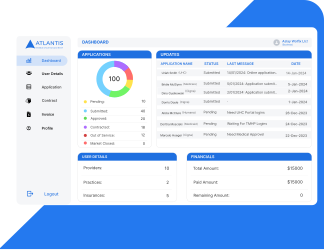
Real-Time Client Report Portal
Access real-time insights into your billing performance with our secure Client Report Portal.Track claims, payments, denials, and KPIs anytime—transparency at your fingertips.
Contact Us