Digital Pathology Supplemental Code Update (2026–2027)

A Pathology Billing and Reimbursement Guide
Digital pathology continues to reshape pathology billing, coding, and reimbursement as slide digitization becomes standard practice across hospital-based and independent pathology labs. Between 2026 and 2027, pathology groups must align digital workflows with evolving pathology billing rules, CPT supplemental codes, and payer reimbursement policies.
As adoption increases, accurate pathology billing services for digital slide digitization is no longer optional. It is essential for compliance, revenue protection, and long-term financial sustainability.
This update explains how digital pathology supplemental codes impact pathology billing, what Medicare and commercial payers currently allow, and how pathology practices can prepare for ongoing reimbursement changes.
What Is Digital Pathology in Medical Billing?
Digital pathology refers to the scanning, storage, and interpretation of digitized pathology slides used for primary diagnostic purposes. According to the American Medical Association (AMA), digital pathology includes acquiring high-resolution digital images from glass slides and using them in clinical diagnosis.
From a pathology billing perspective, digital pathology becomes reportable only when digitized slides are used for medically necessary diagnostic interpretation, not for research, education, or archival storage.
Digital Pathology Supplemental Codes Explained
To track adoption and resource utilization, the AMA introduced Category III CPT add-on codes beginning in 2023. These supplemental codes are used alongside primary pathology CPT codes to reflect the technical work of digital slide digitization.
Key Points for Pathology Billing Teams:
-
Digital pathology codes are add-on codes
-
They must be billed with a primary pathology CPT code
-
They apply only when digitized slides are used for diagnosis
-
No separate professional component is reported
By 2026, these Category III codes remain the primary mechanism for digital pathology billing and utilization tracking.
Pathology Billing Reporting Requirements
Accurate reporting is critical for pathology billing compliance.
Digital pathology supplemental codes:
-
Must be reported only when digitized slides are used for primary diagnosis
-
Cannot be billed for storage, teaching, tumor boards, or research
-
Require proper documentation supporting medical necessity
Failure to follow these rules increases pathology billing audit risk and may lead to claim denials or recoupments.
Medicare Digital Pathology Billing (2026–2027)
Under the Medicare Physician Fee Schedule:
-
Digital pathology supplemental codes are technical-component-only
-
Modifiers such as 26 or TC are not applicable
-
National RVUs and payment rates are not yet assigned
Medicare Reimbursement Challenges:
-
Payment decisions vary by Medicare Administrative Contractor (MAC)
-
Some MACs allow reporting for data collection only
-
Others may permit limited reimbursement under local policy
Because of this variability, pathology billing teams must closely monitor MAC guidance and local coverage determinations.
Hospital Outpatient Pathology Billing and OPPS
For hospital-based pathology services billed under OPPS:
-
Digital pathology supplemental codes are typically packaged
-
Separate reimbursement may not be issued
-
Accurate reporting is still essential
From a pathology revenue cycle management standpoint, reporting these services ensures utilization data reflects the true cost of digital pathology infrastructure.
Units of Service, MUEs, and Pathology Billing Compliance
The AMA instructs pathology practices to report one unit of the digital pathology add-on code per associated primary CPT code.
Compliance Risks to Watch:
-
Medically Unlikely Edits (MUEs)
-
National Correct Coding Initiative (NCCI) edits
-
MAI “2†indicators limiting appeal rights
Between 2026 and 2027, some digital pathology codes still lack published MUE values, increasing the need for front-end pathology billing accuracy.
Financial Impact of Digital Pathology on Billing Operations
Digital pathology introduces new cost structures not captured by traditional pathology CPT codes.
Common Cost Drivers:
-
Slide scanning labor
-
Digital scanners and hardware
-
Software licensing and maintenance
-
Data storage and cybersecurity
-
IT and system support
From a pathology billing and charge capture perspective, practices must establish defensible charges that align with real operational costs.
Why Digital Pathology Billing Still Matters Without Full Reimbursement
Even when reimbursement is inconsistent:
-
Claims data drives future CPT valuation
-
Underreporting limits recognition of pathology workload
-
Accurate billing supports long-term reimbursement policy changes
Pathology practices that fail to report digital pathology services risk lost revenue visibility and delayed payer recognition.
Preparing Pathology Billing Teams for Future Changes
To stay compliant and financially stable, pathology organizations should focus on:
-
Accurate CPT and add-on code usage
-
Strong documentation standards
-
Coordinated workflows between histology and billing teams
-
Ongoing payer policy monitoring
Partnering with experienced pathology billing and revenue cycle management services helps practices reduce risk while navigating evolving digital pathology requirements.
Final Thoughts
The Digital Pathology Supplemental Code Update reflects a major shift in how pathology services are delivered and billed. Between 2026 and 2027, success will depend on accurate pathology billing, compliant reporting, and strategic revenue cycle management.
Pathology organizations that adapt early will be best positioned to protect revenue, demonstrate value to payers, and sustain growth in an increasingly digital healthcare environment.
Talk to Atlantis RCM today to ensure your digital pathology services are coded accurately, reported correctly, and positioned for long-term financial stability.
Our Services


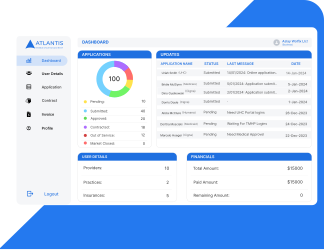
Real-Time Client Report Portal
Access real-time insights into your billing performance with our secure Client Report Portal.Track claims, payments, denials, and KPIs anytime—transparency at your fingertips.
Contact Us