Everything You Need to Know About 2026 CPT Code Updates and CMS Changes

The 2026 CPT Code Updates are here, and they’re about to change how every healthcare practice codes, bills, and gets paid. New AI-powered procedures, fresh remote monitoring codes, and tighter CMS reimbursement rules mean practices can’t afford to fall behind. If your billing workflows aren’t ready, denied claims and revenue gaps will hit fast.
This guide breaks down the biggest changes in clear, simple language and shows how Atlantis RCM helps you stay compliant, error-free, and financially strong in 2026.
Understanding CPT Codes and CMS Updates for 2026
CPT codes offer a shared language for reporting medical, surgical, and diagnostic services. Every year, the American Medical Association reviews new procedures, digital tools, and clinical innovations before adjusting the code set.
At the same time, CMS updates payment rules through the annual Physician Fee Schedule. These updates determine reimbursement values, documentation requirements, and payer expectations. Together, CPT and CMS updates define how medical billing services operate in any practice.

What are the Major Changes in the 2026 CPT Code Set?
Remote monitoring codes now support shorter service windows, making it easier for practices to bill for more frequent patient touchpoints and continuous digital care.
AI-based codes expand across specialties, including cardiac risk analysis, burn assessment, imaging tools, and algorithmic diagnostics improving accuracy and speeding up reporting.
New hearing-care codes replace older code pairs, offering a more organized structure for candidacy evaluation, device selection, fitting, follow-up, and verification.
Revised descriptions simplify documentation requirements, helping billers create cleaner claims and stay aligned with updated payer expectations.
Deleted codes remove outdated procedures, reducing confusion and improving coding precision across medical billing workflows.
More structured code families for hearing-device services, ensuring consistent reporting for initial evaluations, fittings, training, and standalone verification.
AI-powered diagnostic categories expand rapidly, supporting advanced clinical decision-making and automated interpretation.
New Remote Monitoring Codes
Providers can now bill for remote monitoring over 2–15 days within a 30-day period. This update supports short-term assessments and modern digital tracking tools.
CMS also lowered the requirement for monthly monitoring from 20 minutes to 10 minutes. This makes the service easier to document and helps practices capture revenue from small but frequent care interactions.
Growth of AI-Driven Procedures
New AI codes reflect the shift toward automated imaging and algorithm-driven evaluation. These include plaque assessments, burn-wound imaging, perivascular fat analysis, and cardiac dysfunction detection.
Each captures a specific digital process that blends imaging with machine-driven interpretation. These codes ensure that AI-supported clinical tasks receive proper recognition and reimbursement.
New Hearing Device Service Codes
This year brings 12 new codes that replace older hearing-aid service codes. These updates allow clearer time-based billing for candidacy checks, device selection, fitting, and follow-up visits.
They also create new add-on codes for behavioral and probe-microphone verification. The result is more accurate reporting and fewer denials for hearing-care providers.
Updates for Lower Extremity Revascularization
46 new codes replace older LER codes. The update reflects new technology and increased outpatient care. These codes separate different components of the procedure so billing becomes more detailed.
Practices that handle vascular cases must stay aligned with these changes to maintain full reimbursement.
Proprietary Laboratory Testing
Around 27% of all new codes belong to proprietary or advanced diagnostic testing. Molecular diagnostics and lab-developed tests continue to expand each year. Labs and providers using these services must stay updated to avoid coding errors or mismatched payer requirements.
Updates to Audio-Video and Audio-Only Appendixes
CPT appendixes P and T now include more behavioral health and telehealth services, recognizing them as equal to in-person care when requirements are met.
This supports practices expanding through virtual visits and remote treatment.
Key CMS Reimbursement Changes for 2026
CMS proposes updates that directly influence payment rates. The conversion factor is expected to increase by 2.5%, followed by a minor RVU adjustment. Providers participating in qualifying APM programs will see slightly higher payment growth.
For non-time-based services, CMS plans a 2.5% efficiency cut based on the assumption that modern technology reduces physician effort. Geographic Practice Cost Indices and malpractice RVUs are also being adjusted across several specialties. Cardiology, radiology, and revascularization procedures show the biggest impacts.
CMS also introduces new transparency rules for hospitals and surgical centers. Providers must share more pricing data, which may affect reimbursement structures and payer negotiations. A new add-on HCPCS code for Tc-99m radiopharmaceuticals is included in OPPS and ASC rules.
How Billing Teams Must Adapt to the 2026 Changes
Billing teams need to adjust internal workflows before these updates go live. Coders should be trained on all new codes, especially those for AI, remote monitoring, and hearing services. Practices should strengthen documentation standards to match new time-based and technology-driven requirements. Coders must review specialty-specific changes in cardiology, diagnostics, and revascularization. Conducting regular claim audits helps catch issues early, especially in practices with high claim volume. Technology tools should support automated coding updates to reduce errors.
How Atlantis RCM Supports Practices Through CPT 2026 Changes
Atlantis RCM guides practices through every phase of CPT and CMS transitions. With real-time coding updates, AI-enhanced claim scrubbing, and RPA-powered workflows, the company maintains a high clean-claim rate. Their billing specialists are trained in AI-supported procedures, remote monitoring services, specialty-specific coding, and emerging CMS reimbursement changes. Atlantis RCM partners with practices to improve documentation, reduce denials, and maintain compliance.
Ready to cut denials before they hit your revenue?
Talk to our coders and get instant guidance for CPT 2026 accuracy. Contact us!
Conclusion
The 2026 CPT Code Updates and CMS reimbursement changes bring significant transformations to medical documentation and billing requirements. With more than four hundred code adjustments, expanded AI-driven procedures, new remote monitoring structures, and updated payment values, providers must prepare early to avoid compliance risks.
Atlantis RCM helps providers adapt smoothly, maintain accuracy, and protect revenue in a changing regulatory environment.
Frequently Asked Questions
1. What are the major CPT updates for 2026?
The 2026 CPT code set introduces new AI-based codes, expanded remote monitoring services, and fully restructured hearing-care codes. These updates help providers improve documentation, accuracy, and clean claim submission.
2. How do the new AI codes affect billing?
The new AI codes support cardiac risk scoring, burn assessment, imaging analysis, and algorithm-driven diagnostics. Billing teams must confirm proper documentation and time requirements to ensure correct coding and faster claim acceptance.
3. Why are hearing-care codes changing in 2026?
The hearing-care codes have been redesigned to create structured categories for evaluation, device selection, fitting, follow-up, and verification. This removes outdated code pairs and supports more accurate and consistent billing for audiology services.
4. How should billing teams prepare for the 2026 CPT changes?
Billing teams should update workflows, train coders on AI and remote monitoring codes, improve documentation standards, and conduct regular claim audits. Medical credentialing teams must verify provider enrollments for updated service categories.
5. Do the 2026 CPT updates change reimbursement rules?
Yes. Many codes now include new time-based requirements and technology-driven documentation standards. Practices must accurately track time, services, and device usage to ensure proper reimbursement.
6. How can practices prevent claim denials under the 2026 CPT codes?
Practices can prevent denials by using updated codes, improving documentation, enabling automated coding tools, and performing routine audits to catch errors before claims are submitted.
Our Services


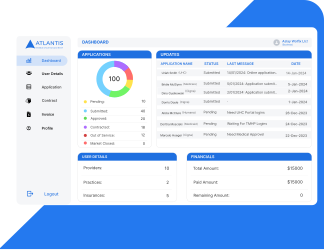
Real-Time Client Report Portal
Access real-time insights into your billing performance with our secure Client Report Portal.Track claims, payments, denials, and KPIs anytime—transparency at your fingertips.
Contact Us