FY 2026 ICD‑10‑CM Updates for Billers: What’s New and What You Must Know

The FY 2026 ICD‑10‑CM Updates for Billers are here and they bring a range of ICD‑10‑CM code changes that will impact medical billing, coding compliance, and the healthcare revenue cycle.
Navigating these updates accurately isn’t just best practice; it’s essential to sustaining clean claims, reducing denials, and improving reimbursements. In this comprehensive guide, we break down what billers must understand, what’s changed, and how to adapt your workflows for success.
What Are the FY 2026 ICD‑10‑CM Updates?
Every fiscal year, the Centers for Medicare & Medicaid Services (CMS) releases updates to the International Classification of Diseases, Tenth Revision, Clinical Modification (ICD‑10‑CM). These changes include new codes, revised code descriptions, deleted codes, and reorganized classifications meant to reflect evolving clinical practices, public health trends, and new technologies.
For billers and coding professionals, staying current with these changes is crucial to ensure coding accuracy and compliance. Let’s unpack the most important updates for FY 2026 without confusing jargon, so you can implement them right away.
Why the FY 2026 Updates Matter for Billers
The medical billing updates embedded in the FY 2026 ICD‑10‑CM release go beyond adding new entries; they reshape how certain conditions are coded and billed. This affects:
Claims accuracy: Choosing the correct code directly affects reimbursement and claim acceptance.
Compliance with regulations: Misuse of updated codes can lead to audits or penalties.
Revenue cycle performance: Proper coding supports cleaner claims and shorter payment cycles.
Let’s look deeper into the specific changes.
New ICD‑10‑CM Codes Added for FY 2026
CMS has introduced a set of ICD‑10‑CM 2026 new codes addressing emerging health concerns, procedural innovations, and more precise clinical documentation needs. Some of the areas with notable additions include:
Expanded Infectious Disease Coding
Several new codes have been created to more accurately classify infectious conditions with unique clinical presentations. These codes support better tracking and reporting of public health concerns.
Example: A cluster of new codes linked to specific post‑viral symptoms reflects ongoing medical findings and documentation needs.
Behavioral and Mental Health Refinements
Behavioral health continues to be a focus. Updates include more nuanced codes that allow clinicians to specify severity and context for mental health conditions like anxiety, mood disorders, and substance misuse.
Chronic and Complex Conditions
Chronic disease coding has been refined in areas like diabetes complications, autoimmune disorders, and long‑term sequelae of serious illness. These updates help improve the specificity of clinical documentation and reflect real‑world care management.
Key Revisions and Deletions in FY 2026
Alongside new entries, CMS also revised or deleted existing codes to reflect current clinical evidence and to eliminate redundancies.
Clarifications to Code Definitions
Some code descriptions have been rewritten for clarity. Pay close attention to these revisions, as subtle differences can change which code is appropriate for your claim.
Example: Updated descriptors for certain fracture classifications, anatomical specificity, or disease staging.
Deleted Codes and Crosswalks
When codes are removed, CMS supplies guidance on replacement or crosswalk codes. Billers must review these deletions and adjust mapping tables to prevent outdated code use.
How to Prepare Your Billing Team for the FY 2026 ICD‑10‑CM Changes
Implementing the updates should be systematic and team‑oriented. Below are key strategies for a smooth transition:
Educate & Train Staff
Host targeted training sessions on the ICD‑10‑CM code changes. Focus on coding scenarios where the new codes apply and real‑world examples of how documentation should reflect the updates.
Update Internal Resources
Ensure all internal coding manuals, EHR templates, and documentation checklists are updated to include the FY 2026 changes.
Audit & Feedback
Perform initial audits to verify correct application of the new codes. Use feedback loops to reinforce learning and fix mistakes early.
Impact on Compliance and Denials Management
Changes in coding classifications inevitably affect how claims are adjudicated. Here’s what billers should watch:
Denials from Incorrect Codes
Using deprecated or inaccurate codes can trigger denials. Given the additional specificity in FY 2026 codes, bills that fail to match the updated expectations may be flagged.
Documentation Gaps
Many new codes require more detailed clinical documentation. This means provider notes must align precisely with coding requirements to support claim validity.
Enhancing the Revenue Cycle with Coding Precision
Aligning with the updated code set supports a healthier healthcare revenue cycle by:
Reducing rejections and appeals
Enhancing payer compliance
Improving cash flow predictability
Accurate coding lends transparency and reliability to billing processes, safeguarding practice revenue.
A Forward‑Looking Approach to FY 2026 ICD‑10‑CM Updates
Understanding and leveraging the FY 2026 ICD‑10‑CM Updates for Billers isn’t optional , it’s mission‑critical. From new disease categories and refined classifications to updated clinical descriptors, these changes directly influence claims accuracy, coding compliance, and revenue cycle performance.
By training teams, revising internal tools, and emphasizing documentation quality, billers can confidently integrate new codes and maintain billing excellence. Staying proactive with these updates will not only help avoid denials and compliance issues, but also position your organization for smoother operations and optimized financial outcomes in 2026 and beyond.
Partner with Atlantis RCM to simplify FY 2026 ICD‑10‑CM updates and optimize your medical billing.
FAQs :
Q1: What should billers do first after FY 2026 ICD‑10‑CM updates are released?
Begin with a detailed review of the new codes and revisions, update internal resources, and train staff on applying these changes accurately.
Q2: Do the FY 2026 updates affect billing compliance?
Yes. Updated codes require precise documentation and correct usage to maintain compliance and avoid denials.
Q3: How often does ICD‑10‑CM get updated?
Updates are typically published annually by CMS to reflect clinical and public health developments.
Q4: Will new ICD‑10‑CM codes change reimbursement?
Potentially. More specific codes can affect how payers interpret claims and reimburse services.
Q5: How can organizations track which codes were deleted or revised?
CMS provides a complete list of changes, including crosswalks for deleted codes and replacement recommendations.
Our Services


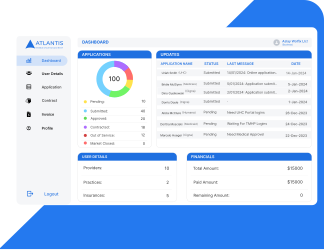
Real-Time Client Report Portal
Access real-time insights into your billing performance with our secure Client Report Portal.Track claims, payments, denials, and KPIs anytime—transparency at your fingertips.
Contact Us