How to Bill Medicare as a Provider: Step-by-Step Guide for Maximum Reimbursements

Billing Medicare can seem complicated, but mastering the process is essential for providers serving millions of Medicare beneficiaries. From enrollment to claims submission, following the right steps protects your revenue and ensures patients receive the care they need.
This guide breaks down Medicare billing into practical steps that are easy to follow, even for new providers.
Step 1: Obtain an NPI Number and Prepare for Enrollment
Your National Provider Identifier (NPI) is a 10-digit number linking all Medicare billing to your practice. Without it, submitting claims or receiving payments is impossible. Apply via the NPPES website and verify your information carefully. Individual providers and organizations need separate NPIs, so ensure your records are accurate.
Once you have an NPI, gather supporting documentation like your professional license, malpractice insurance, and credentials. Being prepared speeds up Medicare enrollment and minimizes delays from your MAC (Medicare Administrative Contractor).
Step 2: Enroll in Medicare Through PECOS
Enrollment is your gateway to billing Medicare. Use PECOS, Medicare’s online enrollment platform, to submit forms (CMS-855I for individual providers, CMS-855B for groups). Institutional providers like hospitals or skilled nursing facilities may have additional fees and requirements.
Ensure all documents are complete and up-to-date. Respond promptly to MAC communications, and maintain your PECOS information for compliance. Accurate enrollment ensures uninterrupted accounts receivable management (AR management ) and reduces claim denials.
Step 3: Verify Patient Eligibility and Coverage
Before providing services, check patient eligibility using MAC portals or verification tools. Determine whether Medicare is the primary or secondary payer, especially if patients have other insurance plans.
Collect comprehensive patient information, including Medicare Beneficiary Identifier (MBI) and current coverage. Document verification efforts in the patient record. Accurate eligibility checks reduce rejected claims and improve practice management efficiency.
Step 4: Gather Required Documentation and Accurate Codes
Proper documentation is the backbone of successful Medicare billing. Include:
Patient demographics (name, DOB, MBI)
Diagnosis codes (ICD-10)
Procedure codes (CPT/HCPCS Level II)
Modifiers when needed
Ensure documentation supports medical necessity for every service. Regularly review coding guidelines and stay updated with CMS policy changes. This step also strengthens medical billing audit and compliance.
Step 5: Submit Medicare Claims
Electronic submissions via HIPAA-compliant systems are fastest and most reliable. Use 837P for professional claims and 837I for institutional claims. Paper submissions (CMS-1500 for professionals, UB-04 for facilities) are backups if electronic filing is unavailable.
Medicare Advantage plans require direct submissions to the plan administrator. Ensure your billing software supports multiple claim formats to avoid delays. Timely claim submission accelerates payments and improves AR management.
Step 6: Respond to MAC Communications and Track Claims
Monitor claims through MAC portals and respond promptly to requests for additional information. Track claims to ensure timely processing typically within 14–30 days.
Correct rejections immediately and resubmit claims with proper documentation. Appealing denied claims effectively can recover revenue that might otherwise be lost. This proactive tracking enhances your practice management workflows and ensures smooth cash flow.
Step 7: Receive Payment and Reconcile Accounts
Medicare payments are deposited electronically, reflecting the Medicare fee schedule minus deductibles or coinsurance. Review Medicare Summary Notices (MSN) or Electronic Remittance Advice (ERA) to reconcile payments.
Bill patients for their portion using Advance Beneficiary Notices (ABNs) when services may not be covered. Timely reconciliation ensures accurate AR reporting and supports financial stability in your practice.
Step 8: Maintain Records and Compliance
Maintain all billing records, documentation, and correspondence for at least five years. Update PECOS with any changes in ownership, services, or addresses.
Stay informed about Medicare policy changes through MAC newsletters and provider education. Proper recordkeeping ensures audit readiness and helps your practice maintain compliance.
Conclusion: Boost Your Medicare Billing Today
Mastering Medicare billing is key to maximizing reimbursements and minimizing errors. Use proven strategies to streamline your process, stay compliant, and accelerate payments.
Take action now and watch your practice revenue grow with Atlantis RCM!
Our Services


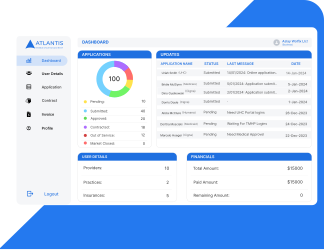
Real-Time Client Report Portal
Access real-time insights into your billing performance with our secure Client Report Portal.Track claims, payments, denials, and KPIs anytime—transparency at your fingertips.
Contact Us