Incident-To Billing in Mental Health Care: Maximize Medicare Reimbursement in 2025

Running a mental health or psychiatry clinic is no small feat. Providers juggle patient care, follow-ups, documentation, and clinic management daily. One of the biggest challenges? Billing correctly to get full reimbursement.
Incident-To Billing in Mental Health Care is a Medicare-approved strategy that helps clinics solve this problem. It allows qualified staff to deliver follow-up care while ensuring the clinic receives full physician payment. By using this approach, psychiatrists and mental health clinicians can focus on complex cases, improve patient access, and streamline clinic workflow.
In this guide, we break down what incident-to-billing is, who can use it, why it matters, and how to implement it effectively in 2025.
What is Incident-To Billing?
Incident-To Billing allows clinics to bill Medicare at the full physician rate, even when care is provided by someone else on the treatment team.
Here’s how it works:
The supervising clinician, often a psychiatrist, first evaluates the patient and develops a treatment plan.
Then, a Nurse Practitioner, Physician Assistant, or licensed therapist follows this plan during routine visits.
Billing occurs under the supervising clinician’s NPI, not the individual staff member providing the service.If a nurse practitioner or PA bills independently, Medicare reimburses only 85% of the physician fee.
Why Incident-To Billing Matters for Mental Health Clinics
Mental health clinics have complex workflows. You manage patient visits, monitor medications, document sessions, and handle refill requests daily, incident-to billing helps clinics manage this workload while maintaining high-quality care.
Billing under a supervising clinician:
Maximizes reimbursement, ensuring full Medicare payment.
Improves patient access by allowing staff to handle routine follow-ups.
Enhances clinic workflow, reducing scheduling bottlenecks.
Supports financial sustainability, particularly for clinics operating on tight margins.
Who Can Provide Incident-To Services?
Medicare sets strict eligibility rules. Not every staff member can bill incident-to services.
Qualified Providers: NPs, PAs, psychologists, social workers, and other licensed clinicians allowed under state law. These are called auxiliary personnel.
Billing Provider: The clinician bills the visit under their NPI. Payment is 100% for physician NPI, 85% for NP or PA billing independently.
Supervision Requirements: Many mental health services fall under general supervision. The clinician guides care but doesn’t need to be physically present. Some services require direct or virtual supervision via live video, permitted through 2025.
Treatment Plan: The clinician must initiate the diagnosis and treatment plan. Any follow-up must follow this plan.
Place of Service: Only outpatient clinic visits are eligible. Hospitals and skilled nursing facilities have separate Medicare rules.
Boost revenue and streamline your practice with expert AR management.
Common Eligible Services
Clinics can use incident-to billing for routine mental health services that align with the supervising clinician’s plan. Medication management follow-ups allow staff to monitor treatment progress. Psychotherapy or counseling sessions can be provided by licensed staff under supervision. Even short nurse visits (CPT 99211) qualify when properly documented.
Following the original plan is critical. Every visit must meet Medicare documentation standards to ensure smooth medical billing.
How to Ensure Compliance
To reduce risks:
Document supervising clinician involvement clearly.
Confirm that staff are licensed and operating within scope.
Ensure all follow-ups follow the treatment plan.
Keep track of general versus direct supervision requirements.
Common Clinical Concerns
Following are key clinical concerns;
1. Fear of Audits
Clinics often worry about Medicare audits. The solution? Clear, consistent documentation. Track every step the supervising clinician takes and ensure follow-ups are within the plan. This reduces risk and keeps your clinic protected.
2. Staff Confusion
NPs, PAs, and licensed therapists may feel unsure about incident-to rules. Regular training ensures everyone understands responsibilities. When staff know how to document visits and follow the plan, workflows run smoothly.
3. Patient Resistance
Some patients may question why they’re seeing staff instead of a psychiatrist. Educating patients helps. Explain that care is fully supervised and maintains the same quality. This builds trust and improves patient experience.
4. Telehealth Confusion
Telehealth introduces questions about supervision. Medicare now allows virtual direct supervision until the end of 2025. clinicians can oversee care via live video, ensuring compliance while offering flexible services.
5. Complex Cases
Routine follow-ups are ideal for delegation, but complex cases should remain with the supervising psychiatrist. New diagnoses, medication changes, or complicated care plans require direct clinician involvement to ensure safety and quality.
Conclusion
By following eligibility, supervision, and documentation rules, clinics can optimize revenue, improve operational efficiency, and maintain high-quality care.
For clinics looking to simplify medical billing, optimize coding, and manage accounts receivable efficiently, partnering with a trusted service provider can make all the difference.
Simplify your mental health billing and maximize reimbursements, partner with Atlantis RCM today for expert medical billing, coding, and AR management solutions.
FAQs
Can an NP supervise incident-to services?
Yes. Nurse practitioners can bill under their own NPI at 85% or under the supervising physician for 100% reimbursement.Does the supervising provider need to be present?
No. Most services allow general supervision, meaning the clinician can oversee care without being physically present.Can unlicensed staff bill incident-to?
No. Only licensed providers, such as NPs, PAs, or psychologists, can bill under incident-to rules.Is telehealth included in incident-to billing?
Yes. Direct supervision can be done via live video (virtual direct supervision), and general supervision offers flexibility for telehealth visits.What if a new patient issue arises?
The supervising clinician must review and update the treatment plan before follow-up visits continue under incident-to billing.What are the risks of incorrect billing?
Medicare can deny claims, recoup payments, or audit your clinic. Accurate documentation is essential to stay compliant.Our Services


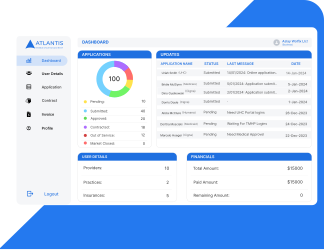
Real-Time Client Report Portal
Access real-time insights into your billing performance with our secure Client Report Portal.Track claims, payments, denials, and KPIs anytime—transparency at your fingertips.
Contact Us