Medical Billing Red Flags That Trigger Audits

Many healthcare practices don’t realize they’re attracting audit attention until claims start getting reviewed, delayed, or denied. Small billing habits that seem harmless can raise compliance concerns and create unnecessary financial risk.
In today’s healthcare environment, payers are using data analytics to spot unusual billing patterns faster than ever. Understanding the most common medical billing audit red flags can help providers protect revenue, reduce stress, and avoid costly investigations.
Frequent Use of High-Level Evaluation & Management Codes
Billing higher-level Evaluation and Management (E/M) codes isn't automatically wrong, but consistently selecting them without sufficient documentation is one of the fastest ways to attract payer attention.
Insurance companies compare provider billing behavior with specialty benchmarks using sophisticated analytics. When a physician consistently reports more complex visits than similar providers, auditors may request medical records to verify medical necessity. Every level of service should accurately reflect the patient's condition, examination, medical decision-making, and supporting documentation. Regular provider education and coding reviews help ensure coding decisions remain accurate while reducing unnecessary audit exposure.
Excessive Modifier Usage
Modifiers help explain why certain services deserve separate reimbursement, but using them too frequently can create unnecessary scrutiny from insurance payers.
For example, repeatedly appending modifiers like -25 or -59 without detailed clinical support may appear unusual when compared with specialty norms. Documentation should clearly explain why the modifier was necessary rather than relying on billing habits. Practices that regularly review modifier utilization often identify trends before they become compliance concerns, improving overall healthcare billing compliance while supporting accurate reimbursement.
Billing for Services Without Complete Documentation
One of the simplest ways to trigger an audit is submitting claims that are not fully supported by patient documentation.
Missing physician signatures, incomplete encounter notes, vague diagnoses, or undocumented procedures weaken claim validity. During an audit, documentation always carries more weight than the claim itself. Even legitimate services may be denied if records cannot prove medical necessity. Establishing strong documentation standards improves claim denial prevention while creating a more defensible billing process for every encounter.
Unusually High Procedure Volumes
Modern payers continuously compare provider billing volumes against national, regional, and specialty-specific benchmarks.
When one practice consistently reports significantly higher procedure counts than peers, automated systems may flag those claims for further review. Higher volume alone does not indicate fraud, but unexplained outliers often prompt additional questions. Periodic internal reviews through medical billing services can help practices identify unusual billing trends early and verify that documentation supports every reported service.
Repeated Corrected Claims and Resubmissions
Corrected claims are part of healthcare billing, but submitting large numbers of corrections often points to workflow inefficiencies.
Frequent resubmissions may result from inaccurate patient information, coding inconsistencies, eligibility verification issues, or charge entry mistakes. Besides delaying reimbursement, recurring corrections increase administrative costs and may indicate larger compliance weaknesses. Practices that actively monitor correction trends within their revenue cycle management workflow are often better positioned to improve claim accuracy before submission.
Billing That Doesn't Match Your Specialty
Every medical specialty has predictable billing patterns based on the services typically provided.
When billing behavior differs significantly from established specialty norms, insurance companies may initiate additional reviews to understand the reason. For example, unexpected procedure combinations, unusual diagnosis distributions, or excessive utilization of certain services may appear inconsistent. Conducting periodic medical billing audit reviews helps verify that coding accurately reflects the clinical services delivered while reducing unnecessary compliance risks.
Ignoring Denial Patterns
Many practices treat denied claims as isolated events instead of recognizing recurring trends.
Repeated denials involving the same payer, diagnosis code, documentation issue, or procedure often reveal process weaknesses that deserve attention. Rather than simply correcting individual claims, providers should analyze why those denials continue occurring. Strong AR management processes help identify root causes, improve reimbursement timelines, and reduce the likelihood of future audit concerns.
Duplicate Billing and Billing Inconsistencies
Duplicate claims, accidental rebilling, or inconsistent charge capture remain among the most preventable audit triggers.
These issues commonly occur because of communication gaps between clinical staff and billing teams, software errors, or manual data entry mistakes. Even when duplicate billing is unintentional, payers may investigate repeated occurrences to determine whether systemic problems exist. Regular reconciliation processes, accurate medical coding practices, and ongoing compliance monitoring significantly reduce this risk while strengthening financial performance.
Conclusion
Medical billing audits rarely result from a single mistake. More often, they are triggered by repeated billing patterns, documentation weaknesses, inconsistent coding practices, and workflow gaps that gradually attract payer attention.
The good news is that most audit risks are preventable. Regular internal reviews, accurate documentation, proactive compliance monitoring, and continuous staff education help practices improve billing accuracy while protecting long-term revenue. By identifying these warning signs early, healthcare organizations can reduce denials, strengthen payer relationships, and build a more resilient billing process.
Ready to Reduce Your Audit Risk?
Even well-managed practices can overlook billing patterns that increase audit exposure.
Atlantis RCM helps healthcare providers identify compliance gaps, improve coding accuracy, reduce claim denials, optimize revenue cycle management, and strengthen financial performance through proactive billing support and comprehensive audit reviews.
Schedule a consultation with Atlantis RCM today and protect your revenue before audit risks become costly problems.
Frequently Asked Questions
What is the most common medical billing audit trigger?
The most common trigger is insufficient documentation supporting billed services, particularly high-level E/M codes.
How do insurance companies identify practices for audits?
Payers use advanced data analytics to compare billing patterns, coding frequency, modifier usage, and reimbursement trends against providers in the same specialty.
Can documentation alone prevent an audit?
Documentation cannot always prevent an audit, but complete, accurate records significantly improve compliance and make responding to audits much easier.
Why are corrected claims considered a red flag?
High numbers of corrected claims may indicate recurring workflow, coding, or billing accuracy problems that deserve further review.
How often should healthcare providers perform billing audits?
Many organizations perform quarterly internal audits, while higher-volume practices may benefit from monthly reviews of high-risk claim categories.
How can Atlantis RCM help reduce audit risk?
Atlantis RCM provides billing reviews, coding support, denial analysis, compliance monitoring, workflow optimization, and revenue cycle solutions that help healthcare practices improve billing accuracy and reduce audit exposure.
Our Services


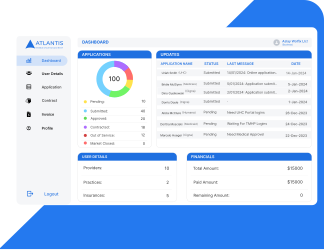
Real-Time Client Report Portal
Access real-time insights into your billing performance with our secure Client Report Portal.Track claims, payments, denials, and KPIs anytime—transparency at your fingertips.
Contact Us