Medical Billing Time Limits in California: Complete Provider Guide

Medical billing time limits in California are crucial revenue deadlines that apply to all providers, now and in the future. Understanding these timelines protects your cash flow and ensures billing compliance.
Whether you manage billing in-house or use outsourced medical billing services, knowing the deadlines keeps your practice paid on time.
These rules are enforced by DMHC, CDI, Medicare, Medi-Cal, and Workers’ Compensation. Each payer has its own filing window. Miss one, and reimbursement can vanish before you even notice. Track claims. Follow timelines. Protect your revenue.
Why Medical Billing Time Limits Matter for Providers
Failing to follow timely claim filing rules can create denial prevention issues and disrupt billing workflow efficiency. Providers who track these timelines accurately maintain consistent revenue flow, reduce write-offs, and optimize AR management.
As regulations remain consistent over time, these guidelines continue to apply to all providers in California, making compliance a long-term business advantage.
How Long Do Providers Have to Submit Claims in California?
Commercial Insurance Claims: Must be submitted within 12 months from the date of service. Late submissions are rejected unless a system error or delayed eligibility is documented.
Medi-Cal Claims: Submission window is 6 months, with extensions only for verified reasons like retroactive eligibility or delayed third-party coordination.
Medicare Claims: Federal rules require 12-month filing, with exceptions like retroactive Medicare entitlement.
Workers’ Compensation Claims: Standard 12-month submission window; extensions up to 5 years allowed for cumulative trauma or emergency treatment.
Medical Billing Time Limits in California for Insurance Payments
After submitting a valid claim, insurers have strict timelines to pay:
Commercial insurers: 30 working days for electronic claims, 45 for paper claims (California Health & Safety Code §1371).
Medi-Cal managed care plans: 18 calendar days for clean claims (DHCS guidelines).
Medicare: 30 calendar days under CMS Prompt Payment Rule.
Workers’ Compensation: 45 working days, or penalties and interest apply (California Labor Code $ 4603.2).
Tracking these timelines is crucial for billing workflow efficiency and avoiding denial prevention challenges.
How Long Do Patients Have to Appeal Medical Bills in California?
Commercial Insurance: 180 days from the Explanation of Benefits (EOB) for internal appeals.
Medicare: 120 days for redetermination.
Medi-Cal: 60 days through the State Fair Hearing system.
Workers’ Compensation: 90 days for Independent Bill Review (IBR).
Missed appeal deadlines permanently block reimbursement recovery.
What Happens If a Provider Misses the Filing Deadline?
Missing a submission deadline has serious financial consequences:
1. Commercial Claims
Expire completely after 12 months if not submitted on time.
2. Medi-Cal Claims
Only one justified resubmission is allowed for verified delays.
3. Workers’ Compensation Claims
Payment and lien rights are permanently lost after the allowed window.
4. Medicare Claims
Late claims are permanently denied, with almost no exceptions.
Even advanced medical coding corrections cannot recover a missed filing, highlighting the critical need for timely claim filing and billing compliance.
Are There Penalties for Late Insurance Payments?
California enforces strict insurer penalties. Commercial insurers face 15% annual interest on delayed payments. Workers’ Compensation carriers face penalties up to 25% of the unpaid amount. Medicare automatically adds federal interest.
Regular medical billing audits help providers detect delayed or underpaid claims before they become permanent revenue losses.
Why Workers’ Compensation Billing Has Unique Deadlines?
Workers’ Compensation operates under a separate legal framework. Providers must submit bills within 12 months. Lien filings expire after 18 months. Independent Bill Review requests expire in 90 days. If additional documentation is required, insurers must request it within 30 days.
Missed Workers’ Compensation deadlines create irreversible legal barriers that no follow-up can fix.
How Medi-Cal Timing Differs From Other Payers?
Medi-Cal’s six-month submission rule is among the strictest. Only verified delay codes for retroactive eligibility, third-party liability, or enrollment conflicts allow resubmission.
Failure to attach valid documentation often triggers permanent claim denials even when services were properly authorized.
The Role of Prior Authorization in Timely Filing
Authorization alone does not guarantee payment. Prior authorization only validates medical necessity, not filing compliance. Missing the filing deadline invalidates even approved treatments.
How Clean Claim Submission Protects Your Revenue
Fast payments come from clean claim submission, with accurate patient data, verified eligibility, error-free modifiers, and complete documentation. Minor mistakes can push a claim past the legal filing window, risking permanent denial.
Business Impact of Missing California Billing Deadlines
Missed timelines lead to:
Permanent lost reimbursement
Inflated write-offs
Reduced practice valuation
Long-term cash-flow instability
Increased dependency on collections
Even high patient volume cannot offset lost revenue from non-compliance.
Who Regulates Medical Billing Time Limits in California?
Deadlines are enforced by:
Multiple regulatory layers make compliance essential for every provider.
Final Conclusion
Medical Billing Time Limits in California are legally enforceable revenue gates. Missing deadlines permanently blocks reimbursement. Track filing windows, insurer deadlines, and appeals to secure financial stability.
Partner with Atlantis RCM to maximize every claim and safeguard your revenue!
FAQS:
1. What are the medical billing time limits in California?
Ans: California sets strict deadlines for submitting medical claims, receiving insurer payments, and filing appeals. Commercial and Medicare claims generally must be submitted within 12 months, while Medi-Cal allows 6 months, with extensions for verified delays. Missing deadlines can lead to claim denials and lost revenue.
2. How long do insurers have to pay medical claims in California?
Ans: Insurers must pay clean claims promptly. Commercial insurers pay 30 working days for electronic claims and 45 days for paper claims. Medi-Cal plans pay within 18 calendar days, Medicare pays in 30 days, and Workers’ Compensation must pay within 45 working days, or interest and penalties apply.
3. What happens if a provider misses the filing deadline?
Ans: Missing California’s medical billing deadlines can permanently block reimbursement. Late commercial claims are rejected, Medi-Cal allows one justified resubmission, and Workers’ Compensation claims lose payment and lien rights. Even corrected medical coding or approvals cannot recover late claims.
4. How long do patients have to appeal medical bills in California?
Ans: Patients have set windows to dispute bills: 180 days for commercial insurance, 120 days for Medicare redetermination, 60 days for Medi-Cal State Fair Hearings, and 90 days for Workers’ Compensation Independent Bill Review. Missed appeal deadlines lock providers out of reimbursement.
5. How can providers avoid claim denials and lost revenue?
Ans: Providers must submit clean claims, track deadlines, attach required documentation, and verify patient eligibility. Using outsourced medical billing services, AR management, and periodic audits ensures compliance, avoids denials, and protects practice revenue.
Our Services


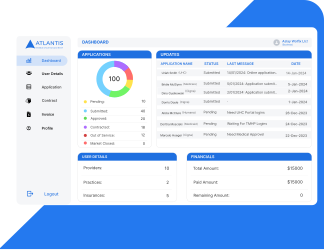
Real-Time Client Report Portal
Access real-time insights into your billing performance with our secure Client Report Portal.Track claims, payments, denials, and KPIs anytime—transparency at your fingertips.
Contact Us