Modifier 25 Explained: When It Should and Shouldn't Be Used

One modifier can mean the difference between a fully reimbursed claim and a costly denial.
Modifier 25 is one of the most frequently used and most frequently misunderstood billing modifiers in healthcare. Applying it incorrectly can trigger payer audits, delayed payments, claim denials, and lost revenue. Understanding exactly when it belongs on a claim is essential for protecting both compliance and reimbursement.
What Is Modifier 25?
Among all billing modifiers, Modifier 25 Explained is a topic every provider, coder, and practice administrator should understand.
Modifier 25 is appended to an Evaluation and Management (E/M) code to indicate that the provider performed a significant, separately identifiable E/M service on the same day as another procedure or service performed by the same physician or qualified healthcare professional.
In simple terms, it tells the payer:
"Yes, a procedure was performed but the patient also required a separate evaluation that went beyond the work normally included in that procedure."
Without this modifier, the payer may assume the evaluation was part of the procedure and deny payment for the office visit.
Why Modifier 25 Receives So Much Attention
Modifier 25 has become one of the most closely reviewed billing modifiers because it directly affects reimbursement.
Many practices either overuse it or avoid using it altogether.
Both approaches create financial risk.
Overusing the modifier can attract payer scrutiny and increase claim denials, while failing to use it when appropriate may result in legitimate E/M services going unpaid.
Using Modifier 25 correctly isn't about increasing revenue, it's about ensuring providers are fairly reimbursed for the work they actually performed.
What Does "Significant and Separately Identifiable" Really Mean?
This phrase causes the most confusion.
A service doesn't qualify simply because it happened on the same day.
Instead, the provider must perform additional evaluation that goes beyond the usual assessment required before the procedure.
Think of the encounter as two distinct services:
An evaluation of the patient's condition.
A medically necessary procedure.
If the evaluation requires additional history, medical decision-making, examination, or clinical judgment beyond what's normally included with the procedure, Modifier 25 Explained becomes highly relevant.
The documentation, not the procedure itself, supports whether the modifier is appropriate.
When Modifier 25 Should Be Used
Modifier 25 is appropriate when an Evaluation and Management visit is independent of the procedure performed during the same encounter.
Common situations include:
A patient presents with multiple concerns requiring separate evaluation.
A new medical problem is identified during the visit.
Clinical decision-making extends beyond the routine work associated with the procedure.
The provider performs a medically necessary office visit in addition to the procedure.
Accurate documentation remains the foundation of proper medical coding and supports compliant claim submission.
When Modifier 25 Should NOT Be Used
Using Modifier 25 simply because an office visit and procedure occur on the same day is a common mistake.
The modifier should not be reported when:
The evaluation is limited to preparing for the procedure.
Documentation only supports the procedure itself.
No additional assessment or decision-making occurred.
The visit was solely scheduled for the planned procedure.
Routine pre-procedure work is already included in most procedural codes.
Adding the modifier without sufficient documentation may delay reimbursement, increase audit risk, and create unnecessary billing complications.
Documentation Is Your Strongest Defense
Payers don't approve Modifier 25 because it's attached to a claim.
They approve it because the medical record clearly supports its use.
Strong documentation should clearly demonstrate:
Separate patient evaluation
Medical necessity
Independent clinical decision-making
Complete visit notes
Clear documentation not only supports payment but also strengthens coding compliance, making future audits much easier to navigate.
Real-World Examples of Modifier 25
Understanding Modifier 25 becomes much easier when you see it in practice.
Example 1: Appropriate Use
A patient visits the clinic with severe knee pain. During the examination, the provider performs a comprehensive evaluation, discusses treatment options, and determines that a joint injection is medically necessary.
Since the Evaluation and Management service was significant and separate from the procedure, using Modifier 25 Explained in this scenario is appropriate.
Example 2: Inappropriate Use
A patient arrives for a pre-scheduled wart removal. The provider performs only the routine assessment needed before the procedure and proceeds with treatment.
Because no additional E/M service was provided, Modifier 25 should not be reported. Adding it could increase the likelihood of claim review or denial.
The difference between these two examples isn't the procedure, it's the documentation supporting the visit.
Common Modifier 25 Mistakes
Many billing issues stem from misunderstanding when the modifier applies rather than from coding errors themselves.
Some of the most common mistakes include:
Using it with every office procedure.
Reporting it without sufficient documentation.
Assuming every office visit qualifies.
Missing payer-specific billing policies.
Avoiding these mistakes helps improve claims processing while reducing unnecessary payment delays.
Why Payers Closely Review Modifier 25
Modifier 25 directly affects reimbursement, making it a frequent focus during payer reviews.
Insurance companies want to confirm that providers aren't billing separately for services already included in the procedure.
If documentation doesn't clearly support the additional evaluation, claims may face:
Payment delays
Claim denials
Medical record requests
Post-payment audits
Strong documentation and accurate coding help practices navigate these reviews with greater confidence.
Best Practices for Accurate Modifier 25 Billing
Applying Modifier 25 correctly is less about memorizing rules and more about following consistent processes.
Healthcare organizations can improve billing accuracy by focusing on a few key practices:
Document thoroughly.
Verify medical necessity.
Review payer guidelines.
Educate providers regularly.
These habits strengthen revenue cycle management while helping practices reduce preventable billing issues.
The Financial Impact of Incorrect Modifier 25 Usage
Using Modifier 25 incorrectly doesn't just affect a single claim.Repeated billing errors can create a ripple effect across the entire practice.
Incorrect usage may lead to delayed reimbursements, increased administrative workload, recurring denials, and additional time spent responding to payer requests.
On the other hand, proper documentation and accurate coding help providers receive fair payment for medically necessary services while maintaining compliance.
When used appropriately, Modifier 25 Explained becomes more than a coding topic, it becomes an important part of protecting practice revenue.
Conclusion
Modifier 25 is one of the most valuable but also one of the most scrutinized billing modifiers in healthcare.
Using it correctly requires clear documentation, sound clinical judgment, and a thorough understanding of billing guidelines.
How Atlantis RCM Helps Providers Bill with Confidence
Modifier-related errors are often preventable with the right billing expertise.
At Atlantis RCM, our experienced billing professionals help healthcare providers improve documentation accuracy, strengthen coding quality, and identify workflow gaps before claims are submitted.
From coding reviews to denial prevention and reimbursement optimization, our medical billing services are designed to support cleaner claims and a healthier financial future for your practice.
Frequently Asked Questions (FAQs)
1. Can I bill an office visit with Modifier 25 on the same day as a procedure?
Yes, but only if the office visit included a significant, separately identifiable Evaluation and Management (E/M) service beyond the work normally required for the procedure. Your documentation must clearly support the additional service.
2. Does every procedure performed in the office require Modifier 25?
No. Modifier 25 should not be used routinely. It only applies when the patient receives a separate, medically necessary E/M service in addition to the procedure during the same visit.
3. What documentation is needed to support Modifier 25?
Your medical record should clearly show that the E/M service was separate from the procedure. Include the patient's history, examination, medical decision-making, and the reason why the additional evaluation was medically necessary.
4. Why was my claim denied even though I used Modifier 25?
Claims are commonly denied when documentation doesn't support a separate E/M service, the modifier is used incorrectly, or payer-specific billing requirements aren't met. Reviewing the denial reason and documentation is the first step toward resolution.
5. How can my practice reduce Modifier 25 billing errors?
Train providers and coding staff regularly, document patient encounters thoroughly, review payer guidelines, and perform routine coding audits. Working with experienced medical billing professionals can also help improve billing accuracy and reduce denials.
Our Services


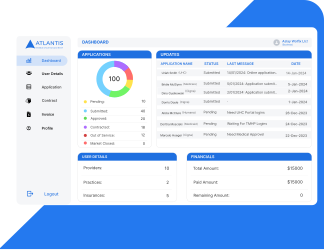
Real-Time Client Report Portal
Access real-time insights into your billing performance with our secure Client Report Portal.Track claims, payments, denials, and KPIs anytime—transparency at your fingertips.
Contact Us