Prior Approval vs Pre-Authorization: A Complete Guide for Healthcare Providers and Patients

Understanding Prior Approval vs Pre-Authorization is essential for healthcare providers and patients. While these terms are often used interchangeably, they serve different purposes in the insurance and billing process. Clear knowledge of these approvals helps reduce delays, prevent claim denials, and avoid unexpected out-of-pocket costs.
With the rise of AI in revenue cycle management, healthcare organizations can streamline workflows, automate prior authorization processes, and predict claim denials before they happen. This combination of technology and human expertise ensures faster approvals and smoother revenue cycle management.
What Are Prior Approval and Pre-Authorization?
Prior Approval vs Pre-Authorization refers to the insurance process of confirming coverage before services are delivered.
Prior Approval: A general “go-ahead†from the insurance provider. It verifies that a recommended treatment, procedure, or medication fits the patient’s plan coverage.
Example: Your doctor recommends surgery. The insurance company may require prior approval to ensure the procedure is medically necessary.
Pre-Authorization: A more specific review that confirms a service meets medical necessity guidelines before approval.
Example: You need an MRI. Your insurer reviews the request to ensure coverage and necessity before scheduling.
Why Are These Processes Important?
Healthcare providers face increasing scrutiny from payers. Efficient management of prior approval and pre-authorization helps reduce delays, avoid denials, and maintain financial stability.
Control Costs and Prevent Unnecessary Procedures
Prior approvals help prevent treatments that are not medically necessary, reducing waste. Leveraging AI in revenue cycle management allows organizations to flag unnecessary procedures early.
Ensure Appropriate Care by Validating Medical Necessity
Approvals confirm that treatments meet clinical guidelines, ensuring patient safety. Integrating EHR systems enables faster verification of coverage and care requirements.
Protect Patients from Unexpected Expenses
Accurate approvals prevent surprise bills and financial hardship for patients. Revenue cycle automation ensures claims are verified before services, lowering out-of-pocket costs.
Streamline Revenue Cycles
Automating approval workflows reduces manual errors and speeds reimbursement. Using prior authorization automation helps providers submit cleaner claims, improving cash flow.
Proactive Claim Management
Advanced tools for claim denial prediction identify potential rejections before submission. Providers can take corrective action, improving first-pass claim acceptance rates.
When Do You Need Prior Approval or Pre-Authorization?
These approvals are commonly required for:
Specialized Treatments or Medications: High-cost surgeries, drugs, or therapies often need prior approval
Diagnostic Tests: MRIs, CT scans, and PET scans may require pre-authorization
Out-of-Network Care: Approval ensures coverage for care outside your network
Long-Term Care Plans: Certain rehab programs and mental health treatments require approval
Understanding these requirements reduces delays and improves patient care outcomes.
How to Navigate the Approval Process
Healthcare providers and patients can follow these steps:
Ask Your Doctor: Confirm if treatment or tests require approval. Provider offices usually handle paperwork
Check Your Insurance Policy: Verify coverage with the insurer directly
Plan Ahead: Start early to avoid treatment delays
Appeal Denials: If a request is denied, submit supporting documentation to challenge the decision
Automating these steps with prior authorization automation reduces errors and speeds up approvals.
Common Misunderstandings
“Prior approval and pre-authorization are the same.†Not exactly. Prior approval is general, pre-authorization is specific.
“Only expensive treatments require approvals.†Even routine lab tests or specialist visits can need authorization.
“Patients must handle everything alone.†Provider offices usually manage the paperwork.
Understanding these differences prevents confusion and supports smoother billing operations.
How Technology Supports Prior Approval and Pre-Authorization
Modern healthcare systems are integrating EHR integration and AI-driven tools to simplify approval workflows:
Automated Eligibility Checks: Confirm patient coverage in real-time
Prior Authorization Automation: Reduce manual entry and speed approvals
Claim Denial Prediction: Identify potential denials before submission
Coding Accuracy: Ensure clean ICD-10 and CPT codes for faster claims
Combining revenue cycle automation with skilled human staff ensures approvals are accurate while staff focus on complex tasks like payer escalation or audit defense.
Benefits of Properly Managing These Processes
Reduced Claim Denials: AI-assisted systems minimize errors
Faster Reimbursements: Streamlined approvals accelerate revenue cycles
Operational Efficiency: Staff focus on patient care, not paperwork
Improved Compliance: Ensures adherence to payer requirements
Data-Driven Insights: Monitor approval trends and optimize workflows
Efficient management of prior approval and pre-authorization can significantly improve financial outcomes for providers.
Conclusion
Understanding Prior Approval vs Pre-Authorization helps healthcare organizations reduce delays, prevent claim denials, and maintain a strong revenue cycle.
When combined with AI in revenue cycle management, prior authorization automation, and seamless EHR integration, approvals become faster, cleaner, and more predictable.
Ready to speed up approvals and get paid faster?
Partner with Atlantis RCM to streamline prior approvals, cut denials, and maximize cash flow.
To take control of your revenue, Contact us today!
Our Services


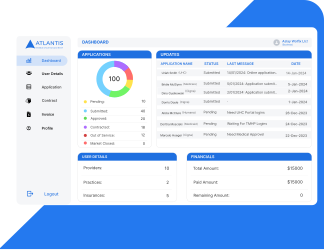
Real-Time Client Report Portal
Access real-time insights into your billing performance with our secure Client Report Portal.Track claims, payments, denials, and KPIs anytime—transparency at your fingertips.
Contact Us