Revenue Cycle Management for Multi‑Specialty Groups: Solve Billing Chaos & Boost Revenue

Managing day‑to‑day patient care is already a full‑time job for multi‑specialty medical practices. When you add billing complexities for dermatology, cardiology, neurology, and other specialties under one roof, financial tasks can easily become overwhelming.
If this sounds like your practice lost claims, delayed reimbursements, and rising administrative costs you’re not alone. Most healthcare providers say their biggest struggle isn’t medicine itself, it's getting paid on time.
This beginner‑friendly guide will walk you through how Revenue Cycle Management for Multi‑Specialty Groups can transform chaotic billing into a smooth, predictable revenue stream that strengthens your practice from the inside out.
Why Revenue Cycle Management Matters for Multi‑Specialty Practices
At its core, revenue cycle management for multi‑specialty groups is about streamlining every financial step from the moment a patient schedules an appointment to the final payment posting. For practices with multiple specialties, this process is more complicated because:
Each specialty uses unique procedure codes and billing rules.
Insurance payers may process claims differently.
Documentation errors become more common with multiple providers entering data.
That’s why practices focusing on healthcare billing optimization see clearer financial results faster.
The Core Challenges Practices Face
Before we explore solutions, let’s acknowledge the real pain points many practices experience:
High Claim Denials
One of the biggest headaches for multi-specialty practices is dealing with claim denials. Every time a payer rejects a claim, your team must spend time investigating, correcting, and resubmitting it. This not only delays payments but also increases administrative workload and stress. High denial rates usually happen because of coding mistakes, missing patient information, or improper documentation. By implementing specialized medical coding teams and automated claim scrubbing tools, practices can significantly reduce denials and protect revenue.
Delayed Payments
Even if claims are submitted, delays in payment are common. Payments can be held up due to unverified patient insurance eligibility, incorrect procedure codes, or incomplete forms. These delays negatively affect your cash flow, making it harder to cover operational costs or invest in new technology.
Disconnected Systems
When different departments operate with separate systems, patient data often gets lost or duplicated. For instance, the cardiology department might update a patient’s insurance information that doesn’t reach the dermatology team, causing errors in billing. Disconnected systems create inefficiencies and lead to mistakes that slow down reimbursements.
Low Staff Confidence in Billing
Staff who are unsure about proper billing procedures or coding updates often spend more time troubleshooting errors than focusing on patient care. This reduces efficiency and can increase the risk of mistakes that affect revenue. Regular training, clear workflows, and the support of professional RCM experts can empower your team.
Best Practices That Really Work
Let’s break down multi‑specialty RCM best practices you can start using today.
Centralized Patient Registration
Begin with accurate patient data. A unified registration process ensures that demographic and insurance information is correct before it ever reaches billing. This alone cuts down many early billing issues.
Specialty‑Specific Coding Expertise
Different medical specialties use different codes. Having certified coders familiar with each specialty helps ensure that claims are coded right the first time.
This step directly supports medical billing efficiency by reducing errors that slow down reimbursement.
Automated Claim Scrubbing Before Submission
Rather than waiting for a payer to reject a claim, automated scrubbing tools check claims for errors before they’re submitted. These tools help identify missing information, incorrect codes, and potential duplicates.
Real‑Time Eligibility Verification
Before seeing a patient, real‑time eligibility checks confirm that coverage is active and benefits are correct. This prevents surprises and reduces the risk of patient disputes later.
Use of RCM Technology Solutions
Modern practices benefit hugely from smart tools that connect electronic health records (EHR), practice management, and billing software. Quality RCM technology solutions automate repetitive tasks, flag high‑risk claims, and generate clear performance reports.
Here’s what tech can help you do:
Track claim statuses instantly
Monitor key performance metrics
Identify patterns that lead to denials
Improve appointment scheduling
Tech‑driven workflows are no longer optional, they’re essential for improving cash flow in medical practice.
How to Measure Success
To know if your new RCM approach is working, focus on a few key metrics:
Clean Claim Rate
The clean claim rate measures the percentage of claims submitted to insurance payers that are accepted without errors or rejections. A higher clean claim rate means your billing team is submitting accurate and complete claims from the start, which reduces the need for corrections and resubmissions.
Days in Accounts Receivable (A/R)
Days in A/R tracks the average number of days it takes for a practice to collect payment after services are rendered. Shorter A/R days indicate that claims are processed quickly and payments are received promptly. Long A/R periods can create cash flow problems, making it difficult to cover operational costs or invest in technology upgrades.
Net Collection Rate
The net collection rate shows the percentage of total billed charges that a practice actually collects. For example, if a practice bills $100,000 and collects $95,000, the net collection rate is 95%. A higher rate demonstrates effective billing and collection processes. Improving this metric involves reducing claim denials, enhancing patient payment processes, and implementing clear billing policies.
Denial Write-Offs
Denial write-offs are the portion of denied claims that a practice cannot recover and must remove from revenue. High write-offs indicate inefficiencies in billing, coding, or claims management. Reducing write-offs means capturing more revenue and minimizing financial losses.
The Role of Staff Training and Support
Even the best technology won’t fix problems if your team doesn’t know how to use it. Regular education in coding updates, insurance rules, and workflow best practices is essential. Encourage your staff to:
Attend webinars
Review payer guidelines
Participate in coding refreshers
Empowered staff lead to fewer mistakes and faster billing cycles.
Patient Experience Matters Too
Patient billing isn’t just a back‑office task it affects how patients feel about your practice. Clear communication about financial responsibilities and flexible payment options help patients pay faster. Practices that focus on positive billing experiences see:
Better patient satisfaction
Fewer unpaid balances
Better reputation overall
Hands‑On: What You Can Do First
If you’re ready to improve billing but don’t know where to start, try this simple 3‑step check‑in:
Audit your current claims from the past 90 days.
Identify your most common denial reasons.
Choose one area for improvement (like eligibility checks or coding review) and focus your team there first.
Get a free medical Billing Audit!
Conclusion
If your multi‑specialty practice is struggling with billing chaos, late payments, and growing administrative costs, you’re not alone but there’s a clear path forward.
Effective Revenue Cycle Management for Multi‑Specialty Groups helps you:
Reduce claim denials
Automate manual tasks
Improve cash flow
Empower your team
Deliver better patient financial experiences
With the right tools, mindset, and processes, your practice can move from stressful billing to controlled, predictable revenue growth.
Partner with Atlantis RCM to unlock streamlined billing, stronger cash flow, and expert support tailored to multi‑specialty practices.
Contact Atlantis RCM today to start your practice’s financial transformation!
FAQs:
Q. What is Revenue Cycle Management for Multi-Specialty Groups?
Revenue Cycle Management (RCM) for multi-specialty groups is the process of managing all financial aspects of patient care from scheduling and insurance verification to claim submission and payment collection across multiple medical specialties. It ensures accurate billing, faster reimbursements, and smoother cash flow.
Q. Why do multi-specialty practices need specialized RCM?
Multi-specialty practices handle diverse coding requirements, multiple payer contracts, and complex cross-specialty referrals. Specialized RCM reduces claim denials, prevents revenue leakage, and ensures compliance with healthcare regulations, making billing more efficient and accurate.
Q. How can RCM technology improve billing efficiency?
RCM technology integrates electronic health records (EHR), practice management, and automated claim processing. It reduces manual errors, identifies high-risk claims before submission, and tracks performance metrics in real time improving billing efficiency and speeding up payments.
Q. What metrics should I track to measure RCM success?
Key metrics include clean claim rate, days in accounts receivable (A/R), net collection rate, and denial write-offs. Monitoring these helps practices identify inefficiencies, improve cash flow, and reduce lost revenue.
Q. How does centralized RCM help multi-specialty groups?
Centralized RCM ensures consistent patient data across all specialties, reduces duplicate entries, streamlines workflows, and allows shared technology investments. This leads to faster claim processing and fewer billing errors.
Our Services


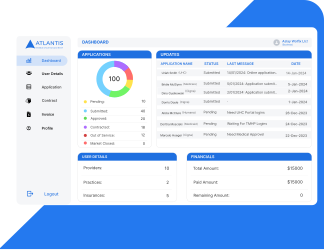
Real-Time Client Report Portal
Access real-time insights into your billing performance with our secure Client Report Portal.Track claims, payments, denials, and KPIs anytime—transparency at your fingertips.
Contact Us