The Real Impact of Time on Orthopedic Billing Collections

In orthopedic billing collections, time directly determines revenue. The longer a balance remains unpaid, the lower the probability of full reimbursement. Orthopedic practices face higher procedure costs, complex insurance rules, and strict payer timelines, all of which make early financial action essential. Delays weaken follow-ups, raise denial risk, and place unnecessary strain on practice management operations. This is why modern orthopedic providers rely on medical billing automation and structured payment workflows to protect revenue before it begins to leak.
From a revenue cycle standpoint, time is not a neutral factor, it is either your strongest ally or your biggest liability.
Why Do Delays Reduce Orthopedic Reimbursement So Aggressively?
The longer a patient balance remains unpaid, the weaker the collection position becomes. Insurance filing limits tighten, documentation gaps surface, and payer audits become more aggressive. At the patient level, delayed billing reduces urgency, increases disputes, and often results in partial or zero recovery.
Without automated medical billing services, orthopedic practices often depend on manual follow-ups, fragmented claim tracking, and disconnected payment workflows. This operational gap turns collectible revenue into lost income. Fast billing is no longer a preference, it is a survival strategy.
Why Upfront Patient Payment Is No Longer Optional
Collecting patient responsibility at the time of service has become the most effective strategy in orthopedic revenue cycle management. When co-pays, coinsurance, and deductibles are secured early, cash flow strengthens immediately and downstream collection costs drop sharply. Practices that delay patient billing often spend more chasing payments than the balance itself is worth.
Professional medical billing services now use real-time eligibility tools to estimate patient responsibility within seconds. When payment expectations are explained with clarity and supported by accurate data, patient resistance drops and collection success rises without damaging trust.
Upfront collections protect not just revenue, but also long-term financial sustainability.
How Payment Policies Protect Orthopedic Practice Revenue
A structured, non-negotiable payment policy acts as the financial backbone of orthopedic operations. Insurance must be verified 24–48 hours before each visit, not during the appointment rush. This ensures the correct payer, correct policy status, and correct patient portion before services are rendered.
Secondary insurance detection, coordination of benefits, and authorization rules must be handled before claims are submitted. Without this, even perfectly documented procedures can result in denials. This is where accurate medical coding and payer-specific rule enforcement directly determine whether revenue is secured or written off.
Strong policies eliminate uncertainty and turn collections into a predictable system rather than a financial gamble.
Why Payment Timing Improves Patient Satisfaction
Contrary to outdated beliefs, clear and early payment communication improves patient relationships. When patients understand their responsibility upfront, confusion, billing shock, and post-visit disputes decline sharply. This protects both your brand and your collections.
Many orthopedic practices now collect payment at the end of the visit if the treatment scope changes. This ensures transparency while maintaining full financial control. The result is smoother practice management, fewer billing complaints, and faster claim resolution cycles.
Efficiency in collections creates confidence in care delivery.
What Is the Most Effective Way to Improve Patient Payment Collections?
Collect patient balances upfront at check-in or checkout.
Secure co-pays, deductibles, and coinsurance early.
Prevent uncertain and delayed patient recovery.
Use practice management systems with real-time eligibility checks.
Estimate balances before services begin.
Improve transparency and patient compliance without resistance.
Orthopedic Practices Are Businesses; Not Just Clinics
An orthopedic practice cannot serve patients without financial stability. Delayed collections lead to staffing cutbacks, reduced investments in equipment, and compromised operational support. Over time, this directly impacts patient care quality and clinic growth.
This is why elite orthopedic providers partner with professional revenue cycle and medical billing experts to keep collections tight, compliant, and consistent. When billing, coding, eligibility, and follow-ups are professionally managed, revenue flows without disruption.
Financial discipline is not aggressive, it is protective.
How Atlantis RCM Solves Orthopedic Billing Collection Gaps

If your orthopedic practice is facing delayed reimbursements, rising denials, or unpredictable cash flow, Atlantis RCM delivers the speed, accuracy, and compliance control your revenue depends on. The longer collections are delayed, the more revenue disappears permanently.
When time is your biggest risk, speed, accuracy, and strategy become your strongest defense.
FAQ's
1. Why is time critical in orthopedic billing collections?
Ans: Delayed collections increase denial rates, reduce reimbursement success, and extend accounts receivable days. Prompt billing ensures faster revenue and lowers administrative effort.2. What is the best way to collect patient payments in orthopedic practices?
Ans: Collecting co-pays, deductibles, and coinsurance upfront using real-time eligibility verification maximizes collections and reduces downstream recovery risk.3. How does insurance eligibility verification help improve collections?
Ans: Verifying benefits 24–48 hours before appointments ensures accurate payer details, deductible status, and secondary insurance coverage, preventing denials and lost revenue.4. Why is medical coding accuracy important for orthopedic billing?
Ans: Accurate coding directly impacts claim approval, reimbursement speed, and audit safety. Even minor coding errors can result in denials or underpayments.5. Should payments be collected before or after an orthopedic visit?
Ans: Routine co-pays and deductibles are best collected upfront, while any additional charges due to procedural changes can be collected at checkout for transparency.
6. How can Atlantis RCM improve orthopedic billing collections?
Ans: Atlantis RCM integrates eligibility checks, medical coding accuracy, patient payment collections, and automated follow-ups to reduce denials, accelerate cash flow, and protect revenue.Our Services


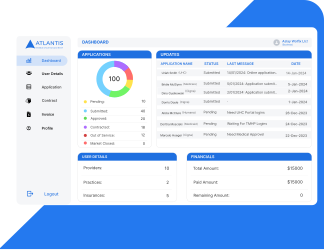
Real-Time Client Report Portal
Access real-time insights into your billing performance with our secure Client Report Portal.Track claims, payments, denials, and KPIs anytime—transparency at your fingertips.
Contact Us