Top 10 Revenue Cycle Management Trends in Healthcare

Revenue cycle management is getting harder every day. Patients are paying more, insurance rules keep changing, and staying compliant feels like a full-time job. One small mistake in billing can hold up payments for weeks, sometimes even months, leaving practices stressed and cash-strapped.
One thing is clear: practices aren’t just asking for billing help anymore. They’re asking for stability. They want steady revenue, simple workflows that don’t break under insurance rules, and a partner who knows today’s healthcare challenges, not old ways from ten years ago. This is why most of the billing partners cannot come up with solutions to modern problems.
1. The Move Toward Value-Based Care Continues to Reshape RCM
Healthcare is now depending upon the outcomes, not volume. For RCM teams, this means keeping patient records correct, spotting potential problems early, and making sure the practice gets paid for real results. Without clear workflows and good data, payments get delayed and claims become harder to fix.
2. Predictive Analytics Becomes the Backbone of Financial Stability
Hospitals and physician groups are no longer guessing why claim denials occur or where revenue leakage occurs. Predictive analytics now flag denial patterns, forecast cash flow, and identify billing gaps.
The organizations leading today’s RCM trends are the ones replacing outdated “submit and hope†routines with automated dashboards and rule-based engines. Every day, when practitioners follow up with payers, they hear the same lines:
“The policy changed, please resubmit.â€
“This claim needs additional review.â€
That’s exactly where manual workflows fall apart.
Practices using automation aren’t waiting for these surprises. Their systems catch coding gaps, missing documents, and payer-specific rule changes before a claim ever goes out. Instead of reacting to denials weeks later, they stay one step ahead protecting revenue, reducing rework, and keeping cash flow steady.
3. Patient Financial Engagement Now Directly Impacts Payment Timelines
Patients now have to pay more of their medical bills than before. This means clinics must give clear cost estimates, easy-to-read statements, simple online payment options, and SMS reminders. These are not “extra services†anymore they are important tools to help you get paid on time.
When clinics do not talk to patients early or do not give clear billing information, payments get delayed and more bills turn into bad debt. But clinics that use patient-friendly tools like online payment links and reminder messages are collecting payments much faster and with less stress for everyone.
4. Telehealth Billing Is Still Evolving and Still Confusing
Telehealth claims come with their own medical coding rules, place-of-service requirements, and payer-specific policies. Many clinics still struggle with denials tied to virtual visit complexities.
As telehealth remains a core service line, medical practices are adopting updated medical billing workflows and tapping RCM partners to maintain compliance as rules continue to evolve.
5. Automation and AI Are Reducing Manual Workloads
Automation is now one of the most helpful tools in modern RCM. It supports everything from checking patient eligibility and scrubbing claims to posting payments and sorting denials.
AI tools find mistakes early, stop repeated manual work, and help your team submit cleaner claims. This means staff can spend more time on important tasks like appeals, talking to payers, and staying compliant.
6. Regulatory Compliance and Audit Readiness Are Becoming Daily Priorities
Payer rules keep changing, so practices must stay ready for audits every day. Even small mistakes in coding or documentation can lead to denials or payment take-backs.
That’s why many groups now rely on billing partners to help with compliance and clean claim management. When every claim follows the rules, practices avoid penalties and protect their revenue.
7. Interoperability Is No Longer a Future Goal It’s an Immediate Need
When systems don’t connect, mistakes and denials go up. Staff repeat the same work because the EHR, billing system, and clearinghouse are not linked.Now, many practices are choosing connected systems so all information moves in one smooth flow. When data moves fast, money comes in fast.
Choose Atlantis RCM billing services that help your claims move faster and your revenue grow.
8. Revenue Integrity Programs Are Gaining Momentum
Revenue integrity means keeping codes correct, documents complete, charges accurate, and following all rules. Practices that focus on revenue integrity get fewer claim denials, better relationships with payers, and faster, more reliable payments especially for high-value procedures.
See How Revenue Integrity in the USA Can Instantly Reduce Claim Denials! Learn more about our Denial Management services.
9. Patient Access Optimization Is Becoming the New Front-End Priority
The revenue cycle starts before any claim is sent. Checking insurance benefits, getting prior authorizations, and talking to patients about costs before their visit decide if the claim will be paid.
More healthcare practices are improving these front-end steps to stop denials before they happen.
10. Outsourced RCM Is Rising as Practices Seek Stability and Expertise
Staff shortages, rising administrative burdens, and payer complexity have accelerated the shift toward outsourced RCM services.
Medical groups are choosing partners who offer:
End-to-end billing support
Automated technology
Scalable teams
Denial management expertise
Specialty-specific coding
Transparent reporting
Why These Trends Matter for Your Practice
Revenue cycle challenges are not moving towards ease, they are getting harder. Practices that adapt to these hardships early gain faster revenues, fewer denials, and stronger financial predictability.
Those who remain reactive will continue facing preventable revenue loss, rising write-offs, and staff burnout.
Atlantis RCM is part of this growing movement helping practices raise their revenue cycle without creating burnouts to the employees. Outsourcing is not a sign of spoon feeding in fact it’s a smart move to protect financial health in a tough healthcare insurance system.
Related Service
Frequently Asked Questions
Q1: What is revenue cycle management (RCM) outsourcing?
Ans: RCM outsourcing means a specialized company like Atlantis RCM handles your billing, claims, and payments so your staff can focus on patient care.Q2: How does outsourcing improve my practice’s revenue?
Ans: Outsourcing helps reduce claim denials, speeds up reimbursements, and ensures accurate billing, which improves cash flow and financial stability.Q3: Is outsourcing only for large hospitals?
Ans: No. Small and medium practices also benefit by saving time, reducing errors, and managing billing efficiently without hiring extra staff.Q4: Can Atlantis RCM help with local payer rules and compliance?
Ans: Yes. We understand regional insurance regulations, payer requirements, and claim management processes, so your practice stays compliant and avoids penalties.Q5: How quickly can my practice see results after outsourcing RCM?
Ans: Many practices notice faster claim approvals, fewer denials, and improved revenue in the first few months of working with Atlantis RCM.Q6: Does outsourcing mean losing control of my billing?
Ans: Not at all. You remain in control, while we provide expert support, reporting, and insights to make your revenue cycle smoother and more predictable.Our Services


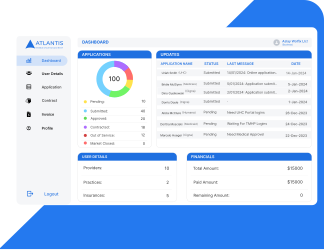
Real-Time Client Report Portal
Access real-time insights into your billing performance with our secure Client Report Portal.Track claims, payments, denials, and KPIs anytime—transparency at your fingertips.
Contact Us